The Face Behind the Mask: Part 1/5

I’m happy to host my good friend, author, and dramatist Kimberly Zweygardt over the next five posts and she shares about being a CRNA— Certified Registered Nurse Anesthetist. You can find out more about Kim by visiting her website here.

Welcome, Kim!

If you have a profession besides writing, doesn’t it bug you when someone doesn’t get it right? It may be something small, but you wonder, “Why didn’t they do some research?”  With the Internet, it is easier than ever to find information, but if it is a hidden profession like my own, there might not be much info for you to glean. Today I want to share with you, The Face Behind the Mask or The Life and Times of a Certified Registered Nurse Anesthetist (CRNA). The operating room is my world, so let’s begin there.

A CRNA is an advanced practice nurse that specializes in anesthesia. CRNA’s were the first anesthesia specialists beginning in the late 1800’s. Anesthesiologists are MDs that specialize in anesthesia (it became a medical specialty after WWII), unless of course you are in great Britain where everyone is an Anaesthetist (Ah-neest’-the-tist’). Confusing, yes? Just remember, the work is the same, but the title is different. For some reason, the term  Anesthesiologist is more widely known (because it is easier to pronounce?), but since CRNAs give over 60% of the anesthesia in the US, if you write a surgery scene, you might want to consider using a CRNA as the caregiver, especially if it is a rural setting. Over 90% of the anesthesia in rural America is provided by a CRNA.

The OR is its own world. Someone has to do the operation, so there are general surgeons, trauma surgeons, orthopedic surgeons (bone), neurosurgeons (brain and nerves), cardiovascular surgeons (heart and major vessels), as well as OB/Gyn (women’s health), ENT (ear, nose and throat) and ophthalmologists (eye surgeon). If it is a large teaching hospital, there might be a medical student or surgery resident assisting the surgeon.

A scrub nurse or surgical technician is there who hands the instruments to the doctor as well as a circulating nurse—a RN who records what happens during the operation as well as obtains any supplies needed in the room. For example, if the doctor needs more suture, the circulating nurse would open it so it remains sterile and hand it to the scrub nurse who is also sterile.

Two of man’s greatest fears are being out of control and the fear of the unknown. The OR setting speaks to both. What great plot scenarios and drama we can create by going through the double doors that lead to surgery!  Next time we’ll talk about interesting scenarios and complications concerning surgery and anesthesia. Happy plotting!

***Content originally posted January 14, 2011.***

*********************************************************************************

Kimberly Zweygardt is a Christ follower, wife, mother, writer, blogger, dramatist, worship leader, Certified Registered Nurse Anesthetist, a fused glass artist and a taker of naps. Her writings have been featured in Rural Roads Magazine, The Rocking Chair Reader, and Chicken Soup for the Soul Healthy Living Series on Heart Disease. She is the author of Stories From the Well and Ashes to Beauty, The Real Cinderella Story and was featured in Stories of Remarkable Women of Faith. She lives in Northwest Kansas with her husband where their nest is empty but their lives are full. For more information: www.kimzweygardt.com

Author Beware: Taking out Perfectly Good IVs

If you’re a frequent reader of this blog then you know I have kind of a love/hate relationship with James Patterson. Love his books (most of them), but I frequently take him to task for medial inaccuracies. I rarely call out an author in person or name their book because I like to mostly teach on medical topics, but I think James could use a medical consultant and I also think he has enough money to afford one– though I think these posts are not increasing my chances of working for him.

Anyway . . .

In one of his recent titles, Woman of God, the first part of the book highlights the main character serving as a physician in a war torn region.

Early in the novel, a young boy comes to their primitive hospital suffering from a bullet wound to the chest. During the surgery, which involved opening up the side of his chest, it is noted that the patient stops breathing and so the surgeon, a mentor of the main character, just gives up.

First of all, a patient receiving major surgery like this should be intubated and anesthetized. They do offer surgery, so must provide this to most of their patients. Earlier in the chapter, it is noted that the patient is being bagged and anesthetized patients can’t breathe on their own anyway— so why is a decision made to let him die when he stops breathing when, if properly cared for, he shouldn’t be breathing anyway?

However, this situation does not deter the main character and she continues his operation.

“The heart wasn’t beating, but I wasn’t letting that stop me. I sutured the tear in the lung, opened the pericardium, and began direct cardiac massage. And then, I felt it— the flutter of Nuru’s heart as it started to catch. Oh, God, thank you.

But what can a pump do when there’s no fuel in the tank? 

I had an idea, a desperate one. 

The IV drip was still in Nuru’s arm. I took the needle and inserted it directly into his ventricle. Blood was now filling his empty heart, priming the pump.”

Where to start, where to start.

First, it’s never noted that this patient is receiving blood. I think this is an add on by the author for effect. Secondly, remember IVs are not needles, but very small plastic catheters, that would not be able to puncture through the tough muscle of the heart.

Thirdly, and by far the most egregious, the physician takes out a perfectly good IV for a nonsensical reason! It is hard, really hard, to get IVs into sick kids— particularly those suffering from hemorrhagic shock like this boy is from a gunshot wound to the chest. That one, lonely IV you took out to puncture his heart (not a good idea either), you’re going to need back because this kid will still be sick. You’ll close his chest and then have to find more IV access. Giving fluids via a vein can rapidly fill the heart and it is insanity to take out a good IV to do what the text suggests.

Call me, James. Really. I’m not as expensive as you might think.

Author Question: Family Notification of Death

Themelina Asks:

I have read some of your posts and I am wondering if I could please have some help regarding a book I am writing. I have three scenes in my book that are in a hospital. The background story is that a girl gets notified that her mom and sister have been in a car crash. Her mom has died and her sister is currently in surgery. Is it right that a police officer comes to her house and lets her know or does something else happen?

After she finds out she faints, and hits her head. I don’t want to make this part sound too serious. However, I still want her to go to the hospital. So what floor would she go to? How long would she stay?

Lastly, the third scene is where the sisters see each other after surgery for the first time. She is paralyzed. How could she communicate with her?

Jordyn Says:

Thanks, Themelina, for sending me your questions.

Question #1: Who would notify the family of the death? I could see this happening a couple of ways. If the mother was declared dead at the scene of the car accident then the police would notify the family. If the mother is transported to the hospital and the hospital team declares her dead then it probably falls on the hospital team to notify the family.

We don’t generally like to give death notifications over the phone. I’m not saying it’s not ever done, but not preferred. We would likely call the family and ask them to proceed quickly, but safely, to the hospital. This might also be preferred because the sister is requiring surgery and except in the most extreme cases surgeons generally like consent before they operate. If there is not a parent to give consent (you don’t mention a father in your scenario) it could fall to the sister, if she is eighteen or over, to give consent for her sister’s surgery.

Question #2: People who pass out and hit their heads are rarely admitted to the hospital. I’m assuming you want this sister to suffer some form of concussion. She gets the awful news about her family, passes out, hitting her head in the process. If she wakes up rather quickly (a few minutes or less), is oriented to person, time and place, and doesn’t show neurological signs of a brain injury that might require surgery then she would get a physician evaluation, a few hours of monitoring to be sure her symptoms are improving, and then she would be discharged home. There would also be no need to wake her up through the night. This is a myth.

Question #3: You don’t specify in your question the level of the sister’s paralysis. Her ability to talk will depend on the level of paralysis. Patients paralyzed from the neck down are, at least for a while, on a ventilator. When a person has a trach, there are special adapters for the trach that allows people to talk. However, a trach is not placed at the beginning and it takes time for a person to learn to talk with the special valve. If she is on a breathing machine and can’t write (because her arms are paralyzed), but is awake and can understand questions then we use a system of eye blinking for responses. One blink for “yes”. Two blinks for “no”. And obviously more simply phrased questions.

Hope this helps and good luck with your story!

Author Beware: This Is Us

Dear This Is Us— please portray nursing accurately. 

Few can argue with the success of the new NBC drama This Is Us. I’m an avid watcher of the show myself. If you like your heartstrings being tugged at every conceivable corner and you’re not watching then you’re missing out on a great opportunity for a good cry. Well, really, several good cries per episode.

nbc-this-is-us-midseason-aboutimage-1920x1080-koThat being said, I was mildly disappointed in a medical scene portrayed in Season 1, Episode 11. If you haven’t seen it, I don’t think I’ll be spoiling much unless you don’t the the fate of Toby post his Christmas collapse. If that statement is true then you should stop reading here.

In episode 11, Toby is getting prepped for heart surgery. He is anxious, but not overly so. It’s a cute and funny scene. There is a flurry of activity as the nursing staff gets ready to take him to pre-op. The conversation goes something like this:

“Name.”

“Toby Damon.”

“Place of birth.”

“Hope Springs.”

At this point, a nurse comes in with a very large needle and makes it noticeable to the patient.

“What is that?” Toby asks. “Holy Cow. Look at the size of that thing! I’m a big guy but geez.”

The nurse then inserts the needle into the IV port and delivers the medication. Another staff member says, “Look this way, we’re getting ready to take you to prep.”

Toby— after the medication takes effect. “What’s in that?”

Nurse replies, “You’re fine. Don’t worry about it.”

Toby asks again. “What was in that needle?”

Nurse responds. “Just medicine.”

Ugh. I mean, really? Let’s take a look at the medical problems with this scene from mild to annoying.

Problem #1: Place of birth is never asked. Although, I do like that they use what is called two patient identifiers— it’s never place of birth. Usually, it’s your birthday. Also, if he’s going to surgery, there should be some communication with the patient about his understanding of the procedure he’s going to have. “Sir, my name’s Jordyn. I’m one of the OR nurses here to take you to the pre-op area. What procedure are you going to have done today?”

Problem #2: It’s called Pre-op. Not prep.

Problem #3: This is getting more egregious. We don’t insert needles into IVs anymore. They are all needleless system. I get that it looks more dramatic to come in wielding a big needle, but it isn’t medically accurate. I haven’t seen an IV system you had to access with a needle in over fifteen years. In fact, in most tubing systems you can’t even insert a needle anymore.

Problem #4: If you are using a needle and the patient is anxious— don’t show them the needle. Obviously, this is one way to increase the patient’s anxiety which is not the direction we want them to go.

Problem #5: The patient asks the nurse twice what he’s being injected with and she doesn’t disclose it. Honestly, this goes against the very fiber of the nursing code. Nursing is about telling your patient the truth and educating them about what’s happening to them medically. Now, in an anxious patient, the explanation doesn’t need to be long. She could have simply stated, “Sir, it’s very common to be anxious before surgery. This medication is called Versed and will help you relax a little bit.”

Just so the staff writers of This Is Us are aware, I am available for medical consultation. Don’t make me hate a show I love by portraying medical people like they don’t care about a patient’s very direct questions. Little is seen in this scene of the medical staff using other methods to calm and relax this patient other than shoving a medicine in his IV and not even educating him about what it is.

That’s not how we take care of patients.

Author Question: Surgical Spleen Removal

Amanda Asks:

I have a character who was shot in the side, not life threatening, but he had to have surgery to remove his spleen as well as the bullet because some rib fragments damaged his spleen.

My question is how long would he be in the hospital after surgery? I’m sure when he first comes home he’ll be getting around in a wheelchair or something while he heals and gets his strength back. When could I plausibly have him on his feet slowly walking around? I don’t want any dramatic complications with his injury or anything. He’s going to heal up great and be perfectly fine afterward.

Jordyn Says:

I ran this question by some of my nursing cohorts who focus in adult surgery.

Having your spleen removed would require a couple days stay in an intensive care unit. This would be due to risk of post-surgical bleeding and concern for infection.

The surgical nurse I spoke to said these patients are up and walking by the time they come to the floor so there would be no need for the character to use a wheelchair.

Once research point that is helpful with this question is that you can Google search for discharge instructions regarding many kinds of operations. For this one, I searched for Home Care Instructions after Spleen Removal. This document gives excellent information that can be translated into your novel.

For instance– how long the patient should expect to have pain. Driving and lifting restrictions which can help determine what they would physically be capable of in your novel.

FYI– patients who have had their spleens removed are at more risk of serious infection. Your spleen is part of your immune system. So some infections that would normally not be a big deal for the general population can be life threatening to those who have had their spleen removed.

Tonsillectomy: Useful But Not Without Risk

I’ve been fascinated by the case of Jahi McMath, who is the girl who suffered surgical complications after a tonsillectomy and has been left brain dead. I’ll be discussing other aspects of this case next week but I thought I’d invite fellow medical musketeer and ENT physician, Dr. Richard Mabry, by to discuss the risks/benefits of this procedure.

I happily endorsed Richard’s forthcoming novel Critical Condition. It’s a great story and gives insight into that elusive area of the hospital– the OR. I hope you’ll check it out when it’s released in April.

Welcome back, Richard!


Any resident physician in otolaryngology (ear, nose and throat) can tell you that tonsillectomy is not a benign procedure. It’s very useful when indicated, but strict criteria for its consideration have been developed.  These include recurrent documented infections as well as sleep-disordered breathing. Attention to these criteria is important before tonsillectomy is considered.
Prior to the procedure, parents should feel free to ask questions or seek clarification of any points they don’t understand. Most physicians have instruction sheets that are given to help prepare families for the procedure.
The procedure itself is typically short—30 to 60 minutes—after which the child is observed in the recovery room until they are fully awake and stable. The child may be discharged later that day if they’re doing well, but sometimes complications necessitate an overnight stay.
The risk associated with a general anesthetic administered by competent personnel is tiny. Probably equally or more important is the possibility of complications occurring after the procedure. 
Undoubtedly, the number one risk is post-operative bleeding. If the child expectorates clots or large amounts of bright blood, parents should seek medical attention immediately. They are also warned to watch for and report fever, persistent vomiting, or difficulty breathing.
The tonsils receive their blood supply from branches of five different arteries, so bleeding—at surgery and afterward—can be a problem. To deal with this possibility, various methods—primarily application of caustic chemicals, use of ligatures, or various types of cauterization—have been traditionally been used. In recent years, surgical methods other than sharp dissection have become more popular. These include partial tonsillectomy and use of lasers to remove tonsil tissue. Thus far, the perfect solution hasn’t been found.
What are the risks associated with tonsillectomy? According to a recent journal article, the risk of dying from the operation ranges from 1 in 10,000 to 1 in 35,000 cases. Although mortality (i.e., dying) is rare, morbidity (i.e., complications) still occur. The most important, of course, is bleeding after the surgery. In one study, the incidence of bleeding was reported at from 2% to 3% of cases. The two most common times for post-tonsillectomy bleeding to occur are immediately after the surgery and after about a week, when scabs separate.
Does that mean that all parents should shy away from a tonsillectomy for their child? Not at all. It’s a very beneficial procedure when indicated and performed by a competent physician. But it behooves every parent to ask questions, learn what to watch for, and participate in the care of their child while they recover from the surgery.
***********************************************************************
Richard Mabry is a retired physician, past Vice President of the American Christian Fiction Writers, and author of “medical suspense with heart.” His novels have been a semifinalist for International Thriller Writers’ debut novel, finalists for the Carol Award and Romantic Times’ Reader’s Choice Award, and winner of the Selah Award. You can follow Richard on his blog, on Twitter, and his Facebook fan page.

Hostages: Episode 8 Analysis 1/3

Seriously, medically speaking, the CBS drama Hostages is becoming that car accident I can’t avert my eyes from. This episode had me doing some serious eye rolling– one of my eyes may have actually rolled away from me at one point. I have since recovered it so don’t worry.

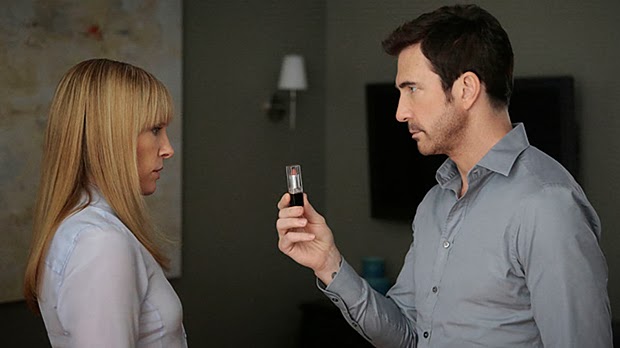
During episode 7– the husband is left alone with the primary hostage taker and his primary goal is to do him in. What remains in the house is the “colorless, non-traceable, fast-acting poison” that was contained in a lipstick holder for Ellen to give the President during surgery.

Hubby finds it, a needle and syringe and draws up the medication. At the end of this episode he manages to put it into his chest and pushes in a little of the medication.

Enter the hero doctor who is now convinced that he must live or all of her family will die.

She asks him, “What is the poison?”

He says, “A rapid-acting paralyzing agent.”

At this point, I’m going to beg the producers of this show to either get a new medical consultant or hire one. Because, whoever is advising them doesn’t know anything about WHY this wouldn’t kill the president during his operation.

Paralyzing agents don’t stop your heart from beating. I’ve blogged here before about the unique characteristics of heart cells. They have their own automaticity. Paralyzing agents work at the neuromuscular juction to stop the muscles from being able to contract. Your heart muscle is different from this system but your diaphragm is not which is the primary muscle used for breathing.

The reason a paralyzing agent will kill you is that it stops the contraction of your diaphragm muscle and therefore you stop breathing. Obviously, if you’re not breathing you’re going to die so to save your life we have to provide rescue breathing and preferably oxygen.

In surgery, especially the type of surgery the president is having which is a lung surgery, he is already going to be intubated and bagged with oxygen to keep him alive. The injection of a paralyzing agent (of which he may already have some on board to get him intubated) would have a net ZERO effect.

You can read more about neuromuscalur blocking agents here

So– it is fiction people and someone in the military wants him gone. You can’t invent an odorless, rapid-acting, undectable poison and give it a cool name?

Part II we’ll continue with the good doctor’s treatment.