Medical Errors in Manuscripts: Know Your Anatomy

Let’s answer the medical question posed in the last post. How do you keep an intubated patient from extubating themselves? There are a couple of options.

One is to sedate them. Sometimes sedation is necessary because the patient is so ill that we need to have total control over the patient’s breathing and we don’t want them “bucking” the ventilator. Bucking is medical lingo for the patient fighting what the ventilator is trying to do. It’s very hard to breathe on a ventilator because the machine is forcing air into the lungs. It’s unnatural in comparison to normal breathing.
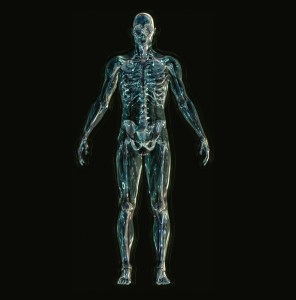
skeleton-1243818_1280Two is to restrain them. Typically a patient on a ventilator is restrained at the wrists and these are secured to the bed. Even a sedated patient can have these applied. This is for safety. Lastly, in a highly cooperative, ventilator dependent patient who has grown accustomed to living with the ventilator, they may neither be restrained or sedated. This tends to be more rare.

Let’s move on…

Note to authors everywhere: Know your anatomy. Gray’s Anatomy. The book . . . not the show.

Here’s a paraphrased example I read in a published novel. I’m not going to name the novel or author to protect the innocent. The purpose is to educate.

John Doe looked at the scar that ran along his right rib line, where a splenectomy incision might be.

Did you catch the problem? Your spleen is on your left side. Anatomy questions should be the easiest to research on Google University. Simply type in “what side is the spleen”. Go ahead . . . try it now. What I got was the “left” side in the first four of five options without even going to a web site.

Take the extra time to be sure the easy things are correct.

Medical question for you: What does it mean if you have dextrocardia?

Medical Errors in Manuscripts: People on a Vent Cannot Speak

Last post I posed a medical question. Why are there white stripes on IV catheters? Answer: If the catheter is lost in the patient, you can find it on x-ray.

Now for another common medical error seen mostly on television and at times in works of fiction.

Note to writers everywhere: Intubated people (those that are on a breathing machine) cannot talk or even moan.

I’ll start by covering the basics. The sound of talking (and other noises) is made when you pass air through your vocal cords causing them to vibrate. This is what your vocal cords look like.

Jeffbrent/Photobucket

When a patient is intubated, a large plastic tube called an endotracheal tube (ETT) is passed down the throat, through the vocal cords, and into the trachea. The end of the ETT should sit slightly above the carina. The carina is the bifurcation, or splitting, of your trachea into the right and left lung. The ETT is positioned there so both of the lungs get ventilated or inflated with oxygen.

This is what an endotracheal tube looks like.

Adventures of a Respiratory Care Student/Photobucket

When the ETT is fitted correctly, a person should not be able to make noise because air is not passing through their vocal cords, it’s passing through the tube. In an adult, the balloon at the end of the tube is inflated so that it fits snug inside the trachea. If we hear an intubated person speaking or moaning, we know that air is passing through the vocal cords again and something is wrong with the ETT.

It could be as simple as the balloon or “cuff” needing to be inflated with a little more air so it fits snug again. It could be as complicated as the patient has become extubated—meaning the ETT is no longer in the trachea and you go in the room and find the patient holding the tube in their hand.

Medical question for you: How are intubated patients kept from extubating themselves?

Medical Errors in Manuscripts: An IV is not a Needle

This week I’m going to cover three of the most common medical errors I see in manuscripts.

Note to authors everywhere: An IV is not a needle.

Product Photo

This picture is the IV as it comes out of the package. This is an over-the-needle catheter meaning the needle is encased inside the catheter. Once the needle is inside the vein, the white button (seen at the base of the blue part) is pushed and the needle is sheathed inside the bottom plastic holder. You can see the spring fills that compartment in comparison to when the needle is visible. This is a safety feature to prevent needle stick injury. Once the needle is gone, a small plastic catheter is left inside the vein. Not a needle. The needle is gone.

When you start an IV you get a “flashback”— meaning blood is visible in the catheter. Typically, once you get flashback, you advance the catheter and needle a little more (like one millimeter) into the vein. Then you’ll slide the catheter off the needle and advance it into the vein, popping the button to sheath the needle. Then you connect tubing or a cap to the yellow portion and you now have IV (intravenous) access.

Needle recapping is a no-no in the medical setting. Every healthcare provider is drilled to never recap needles. Many devices have safety features like this one so you don’t have to recap to cover the needle.

Did you know the hubs of IV catheters are color coded for size even across different brands? For instance, a yellow hub is a 24 Gauge catheter. And catheter sizes are inverse so the smaller the number, the larger the IV catheter is. A 24 Gauge would be the size for an infant versus an 18 Gauge would be the size for an adult patient.

Medical question for you: Why are there white stripes on the plastic catheter (the part that stays inside the patient)?