Proper Treatment of a Suicidal Patient.
 Netflix recently released a psychological suspense (perhaps some would call it horror) movie called Clinical. It surrounds the story of psychiatrist Dr. Jane Mathis who is an expert in dealing with PTSD. She is recovering from her own traumatic experience, a patient attempting suicide in front of her, and has vowed to not care for these types of patients until her own issues are resolved. However, the work of regular psychiatric problems doesn’t seem fulfilling enough so she takes on the case of a facial transplant patient named Alex.
In one particular scene, Alex calls Jane and states he “took too many pills”. I don’t know how this could be viewed other than a suicide attempt. Instead of calling 911, she goes to his home. Once there, Alex is first scene barely conscious, but is evidently able to stand up and answer the door. From that point on, the conversation goes something like this:
Alex: “Did you call an ambulance?”
Jane: “What did you take? If you don’t tell me, I’m going to have to call 911.”
Alex eventually becomes unconscious. Jane then administers a drug via IM injection. In the next scene, Alex is vomiting.
Jane is holding a prescription bottle in her hand. “How many of these pills did you take?”
Alex: “I just wanted to sleep for a while. What did you give me?”
Jane: “It’s called naloxone. I only use it for emergencies.”
Just. Awesome.
Issue One: I can’t imagine how many ethical and legal lines it crosses that this psychiatrist did not have this patient involuntarily committed to the hospital under an M-1 hold when he clearly tried to commit suicide. I’ve seen M-1 holds placed on patients for far less than an actual attempt. Clearly, this is a big medical no-no and really doesn’t do the patient any favors. Just because the patient’s worried financially about an ambulance ride doesn’t mean he doesn’t get one.
Issue Two: Let’s discuss the medical drug naloxone or Narcan. This is a reversal medicine for drugs that contain opiates. This would include drugs like morphine and heroine. It’s not clear what drug Alex took— all he says is sleeping pills. To me, sleeping pills would more than likely contain some kind of benzodiazepine, of which there is no reversal a doctor would personally carry, though one is available in the hospital setting.
Issue Three: The scene where the patient is vomiting after the Narcan is administered. I’m not sure if the writers are portraying that the drug induces vomiting so that the patient throws up the pills. If so, that’s not medically accurate. Narcan reverses the effects of opiates at the receptor level. It immediately brings the patient out of their high and they’re usually not very happy about that. Most often, we don’t want to fully reverse the drug as this can put a patient at risk for seizures so we may titrate the dose just to reverse the diminished (or lack of) breathing induced by taking too much of the drug.
I actually think it’s okay the doctor did these things if it would have been pointed out by her mentoring/treating psychiatrist that she acted inappropriately and he was going to report her to the Board of Healing Arts because of her actions.
That would have ramped up the tension/conflict on many levels.
 That being said, I was mildly disappointed in a medical scene portrayed in Season 1, Episode 11. If you haven’t seen it, I don’t think I’ll be spoiling much unless you don’t the the fate of Toby post his Christmas collapse. If that statement is true then you should stop reading here.
 In the second episode, the show centers around a young man who has just received a lucrative major league baseball contract when he’s diagnosed with cancer, specifically AML, which is a form of leukemia. People kidnap his bone marrow donor and hold her for ransom.
 Breaking Bad. In the last season, a gentleman decided to kill himself using an AED.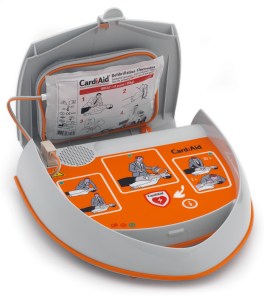
 Several more minutes ticked by before the nurse, her peppiness especially noticeable in the wake of her cool, serene, superior returned. A brown paper lunch bag full of brightly colored condoms bunched underneath her arm, a prescription bottle in one hand, and a glass of water in the other.
 There had been a question burning in my throat for the last ten minutes, but it was her reaching for the handle of the door that forced me to say it. “Is it rape if you can’t remember what happened?”
 Let me first state, clearly, that you can have a bad medical person in a novel. They can even be doing bad things. Criminal things. That’s what drives fiction. Tension. Conflict. However, also should the author help the reader realize, in some fashion, that the author knows this fictional medical character is doing these things inappropriately and it is
 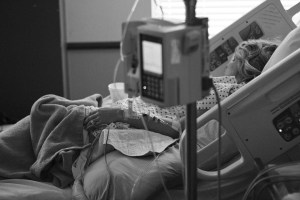 The door opened, and an older gentleman in a lab coat walked briskly into the room. He checked the clipboard hanging from the end of the bed, noted the numbers on the monitors beside the bed that were tracking Tony’s vitals, and nodded, apparently pleased with what he saw. (
 Tony screamed out to God, and flung his hands over his face. Rough hands grabbed his hands as he tried to pry off whatever was smothering him. (
 Today, I thought a fitting Halloween post would be an evaluation of a recent episode of Criminal Minds. I’ve been a fan of the show for years and am always intrigued with the cases and devious/suspenseful minds of the screenwriters.
 Redwood's Medical Edge