When Carpooling Goes Wrong: Analyzing Dexter S4E2

Ah, Dexter. Few shows juggle serial killing, dark humor, and wildly inaccurate hospital scenes quite like you. In Season 4, Episode 2, our favorite blood-spatter analyst wrecks his van—with a dead body conveniently riding shotgun in the back—and winds up in the ER. What follows is a crash course in how not to portray medicine on television.

Let’s dissect, shall we? (Pun very much intended.)

The ER doctor shines a light into Dexter’s eyes. Normal practice? Sure. But then we’re treated to the statement that his pupils dilate. Pupils constrict when you shine a light into them. They dilate in darkness. This is how the human body properly works.
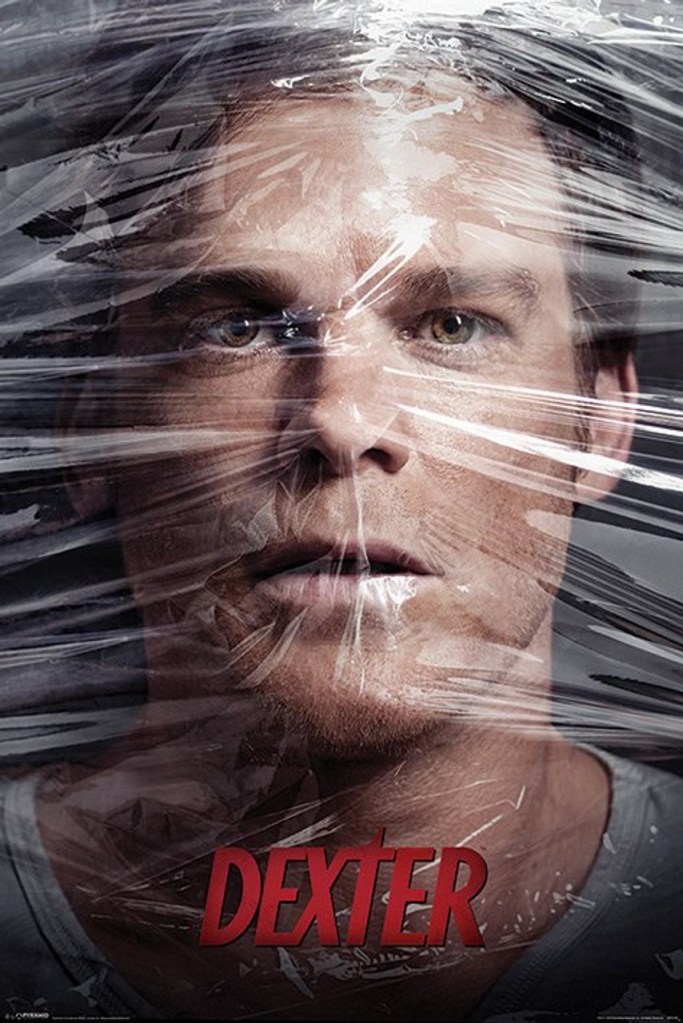
Next, the doctor looks at Dexter’s CT scan and announces, “You’ve sustained a concussion.” implying that concussions are diagnosed this way. Concussions can be clinically diagnosed, based on symptoms like headache, confusion, dizziness, and loss of consciousness. You don’t need a CT scan to tell you that, and a CT isn’t going to show a concussion anyway. If it does, congratulations—you’re likely now dealing with a bleed, not a simple concussion.

But hey, why rely on pesky medical standards when you can dramatically gesture at a glowing scan instead?

Then comes one of my favorite relics of outdated medical lore: the “Don’t let him sleep” after head injury rule. Dexter is told not to sleep for twelve hours, as if a good nap might somehow erase him from existence.

In reality? We don’t keep people awake anymore after they’ve suffered a head injury if they feel like they need to sleep. That advice has gone the way of lobotomies. Any injured body part needs rest to heal. The brain rests by sleeping. Sleep is good and beneficial for the head injured patient. The guidance is: let the patient rest, check in periodically if symptoms worsen, and maybe—just maybe—don’t torture the poor guy who just got his bell rung trying to hide his crimes.

Ultimate lesson– don’t get into a car accident with a body in the back of your van that the police are going to tow.

Which show do you think butchers medical accuracy the most and which on gets it right?
Head Injuries: Jason Joyner

There was that time when the editor saved the medical professional.

As a physician assistant, I enjoy having medical aspects in my story. But even medical folks can slip up and have errors in our fiction.

I have a scene where my heroine gets head trauma and wakes up later in the clutches of the villain. The freelance editor, Ben Wolf, wondered about that. He had read that if there was significant time of loss of consciousness (LOC), then it suggested a serious injury that would be hard for the victim to bounce right back from to be active.

One of my pet peeves is when characters are injured and recover too fast, so I had to look into this again.

Basically, my heroine suffered a concussion, also known as a Traumatic Brain Injury (TBI). Symptoms of a concussion can include headache, confusion, dizziness, visual changes, a blunted affect, and may or may not include LOC. (People always flash lights in pupils to check for concussion. If the pupils are affected, it is a serious sign and they won’t be up and active soon.)

LOC usually is only for a few minutes, and as my editor noted, will mean a much more severe injury if it lasts for hours.

Blast. Foiled by the editor.

Except, you can use the amnesia angle.

A concussion with LOC may have retrograde (before the incident) or antegrade (after the incident) amnesia. According to one research article, the antegrade amnesia can last for a few hours after the incident. I can attest – I had a concussion in 5th grade and couldn’t remember a couple hours afterwards.

So if you need your protagonist to be out of it for a while, keep the actual LOC on the short side and use the amnesia angle to get you where you need to be. The victim may be incoherent, unsteady, with a blank expression during this time. Use these symptoms to add drama to the situation.

When your protagonist comes to, it is actually the end of antegrade amnesia. I remember with my concussion it was like I “woke up” after lunch during our quiet reading time at school. I was confused, unsure of what happened. I could remember part of the morning, but about two hours was blank. I even found a goose egg on my head later, but I didn’t know how it got there.

So that was my work around. My heroine didn’t have LOC the whole time. But there was enough injury to cause confusion and amnesia, keeping her from attempting escape. There you go Ben. A few minor tweaks, and all is well. Except for my heroine, who’s tied up and threatened. But that’s another story.

**************************************************************************

Jason loves good stories and wants to use words to make a difference. When he’s not writing, playing soccer, or losing in fantasy football, he works as a physician assistant in southeast Idaho. He also tries to keep up with his awesome wife, three high-energy boys, and his little princess. He writes suspense and YA supernatural, and likes to use his medical experience to punch up the stories. You can find him on Twitter @JasonCJoyner or his blog at www.jasoncjoyner.com/blog.