Author Question: Refusing Medical Treatment

Carrie Asks:

My novel is set in the US and my MC, who’s eighteen, is injured. He’s suffering from concussion, blood loss, and hypothermia, and is very weak and quite disorientated. He is, however, conscious and responding, and adamant that he does not want to be treated or taken to a hospital (and the plot requires him not to be). I understand that he’d be able to refuse treatment if he signed a form saying so. My question is, is there a standard procedure that an EMT would follow before letting him sign?

Jordyn Says: Thanks for e-mailing me your question. You have an interesting scenario here.

I’m going to come from the standpoint of this person presenting to the ER. Put simply, we are not going to let this patient sign out AMA. A couple of things in your statement about his condition will prevent this. Almost everything you’ve listed as far as his medical condition makes it impossible for him to make a reasonable decision regarding his care–concussion, disorientation, hypothermia. Even though he can talk, it doesn’t mean he has enough medical capacity to make an appropriate decision regarding his care until these issues are straightened out.

We would do everything in our power to keep him in the ED. Considering that– you have a couple of options. Make him a lot less sick. Maybe just a few bumps and scrapes. Or, he could elope from the ED somehow, but if we were really concerned about his medical condition we might send the police to fetch him back. Of course, this could add conflict into your story.

I did verify this through an EMS friend of mine as well. The issue is not whether or not they can talk, it’s whether or not they are medically competent to make a decision about refusing care. This character’s condition precludes that.

Micheal Rivers: Altered Mental Status

I’m pleased to host guest blogger Michael Rivers today as he discusses the EMS perspective on altered mental status.

Welcome, Micheal!

EMS handles thousands of calls every year especially in the larger cities like Chicago. There is one kind of emergency call that can take the life of a Paramedic or EMT very quickly, or leave him or her with serious injuries. These calls are either for domestic or institutionalized people with altered mental status.

These calls are handled differently from other calls even involving shooting because the medical personnel have no idea what they can be walking into. Although he is there to help, the sight of the uniform alone can cause a very violent reaction from the patient. The ambulance personnel must not only be wary and insure the safety of the scene, but he has to be inventive when handling his patient.
Depending on the scene you never want the patient to hear your siren or see the flashing lights of the ambulance. It frightens them and they automatically become defensive. If you are running code 3(emergency) stop the siren and the lights a block or more before you arrive on the scene. If at all possible gather all the information on your patient and turn this to your advantage. These are some very good examples that work. This knowledge was gained through experience.
The patient was a 320 pound female confined to a psych facility for homicide. She was known to go through fits of rage even when under the influence of her medication. Arriving on the scene she was found in the nurse’s station sitting in a chair brooding. An armed security guard from the Sheriff’s department stood close by her. Due to the experience of the EMT’s, one stayed at the entrance while the attending EMT walked by the patient basically ignoring her while visually accessing her as he passed by. This assessment tells a great deal about who he is dealing with.
With a better knowledge of the problem and a few personal facts you begin to communicate with your patient. They want to be heard. Listen to them and find a way to get them on the stretcher without a fight. You may have to become an accomplished actor, but you have to convince them you are genuinely concerned and you are their friend, their guardian. In this case the attending EMT was able to get the vitals and convince her to get on the stretcher on her own when in the beginning she refused to be touched. If they had tried to force her, there would have been someone taking a lot of body damage. She was strapped x4 thinking it was for her safety.
Knowing the patient was not diabetic and was allowed sweets was a plus. With a simple cookie and the promise she would not be harmed, (history of physical abuse) she co-operated fully. She was even able to display sympathy for the EMT when he said he would get in trouble if she did not let him take her to the hospital. The call went smoothly and the patient was able to receive treatment without causing further harm to her.
These EMTs were very experienced. Experience cannot always let you see the unexpected coming. They specialized in the Altered Mental Status calls and knew exactly what to look for. Yet, Ambulance 04 was retired one year later after nearly being destroyed as the driver was attacked by a street person from inside the ambulance with altered mental status. This was an incident where the driver’s window was down to answer a man’s question. The street person dove through the window attempting to kill the EMT. At the time they had another patient inside the ambulance also with altered mental status.
This is a perfect example of the symptoms of altered mental status not being displayed by a person you are speaking with. If you are an EMT or Paramedic you already know the question; “Is the scene safe?”
***********************************************************************

Micheal, born in 1953, is an American author. He served his country as a United States Marine during Vietnam. Born in North Carolina, he lived in the Chicago area in the past and furthered his education there and served the community as an Emergency Medical Technician. Micheal returned to the mountains of North Carolina where he resides with his wife and his Boxer he fondly calls Dee Dee. You can learn more about Micheal at http://michealrivers.com/.

Dianna Benson: EMS Treatment of a Minor (1/2)

Mart asks: My MC is 16 yrs old. She gets hit by a truck. She has road rash. Right leg turned black and blue. Shin welled up. But other than feeling like she literally was hit by a truck, she is okay….she thinks. What would most likely occur after an incident like this? In short, how can I make it so a 16 yr old girl who has been hit by a car, stalls at home before her Mom takes her to the ER?
I hope there is a way.
Dianna says:
A 16-year-old can accept EMS treatment and transport to a hospital. However, a 16-year-old cannot refuse treatment and/or transport – EMS has a refusal form that requires a signature from the patient, a minimum of age 18, or from a parent or legal guardian of a minor aged patient, 17-years-old or younger. EMS will not leave a patient at the scene until we obtain a signed refusal form (we wait for as long as it takes to obtain that signature).
It’s not uncommon for patients to refuse an ambulance transport to avoid additional medical bills and then have someone drive them to the ED.
From your scene description, it sounds like the patient was a pedestrian stuck from a truck at low speed, propelling her body in the air slightly; her leg skidded on the road, stopping her.
A pedestrian struck by a moving vehicle is a serious mechanism of injury thus a high priority trauma. EMS will encourage both treatment and transport by explaining to your patient she may have internal injuries.
I actually say to patients, “I don’t have x-ray vision or CT scan capabilities inside my ambulance, so I’m unable to verify if you’ve sustained internal injuries or not.” If transport is still declined, I obtain a signature of refusal from a parent or legal guardian (the uncle wouldn’t be enough). The way around this legal issue is for the MC to call her mom and EMS waits for her to arrive on scene.
Was the truck driver at fault for hitting the MC? If the driver is legally at fault, then most patients tend to accept EMS treatment and transport (think law suit). Regardless of any pending law suit, I think the uncle would insist the main character be transported.
Once the mom arrives on scene, I find it unbelievable (and not likeable or smart of the mom) that a mom would refuse transport to a hospital for their injured teenager struck by a moving truck as a pedestrian. That’s a serious mechanism of injury (most car accidents are minor, but being hit by a car as a pedestrian is serious). However, if you prefer to avoid an ambulance ride in your story, then write in the following: 1) Keep the injuries extremely minor – EMS finds no abnormalities beyond right lower extremity minor swelling and abrasions with slight oozing blood.  2) All her vital signs are within normal limits. 3) The patient assessment from EMS cleared C-spine immobilization (backboard and neck collar).
However, since the mechanism of injury is significant, in order for those three above points to be believable, you’ll need to write in the following: 1) The truck was moving at extreme low speed (like 5 miles per hour); it’s amazing how much damage just 10 miles per hour causes. 2) The truck is small or it’s a small car. 3) She wasn’t thrown far in the air (height or distance) and didn’t hit anything else. 3) Her behavior and signs and symptoms indicate she suffered no injuries beyond minor contusions and abrasions. 4) She’s adamant against a trip to the ED.
***********************************************************************

After majoring in communications and enjoying a successful career as a travel agent, Dianna Torscher Benson left the travel industry to write novels and earn her EMS degree. An EMT and Haz-Mat Operative in Wake County, NC, Dianna loves the adrenaline rush of responding to medical emergencies and helping people in need, often in their darkest time in life. Her suspense novels about characters who are ordinary people thrown into tremendous circumstances, provide readers with a similar kind of rush. Married to her best friend, Leo, she met her husband when they walked down the aisle as a bridesmaid and groomsmen at a wedding when she was eleven and he was thirteen. They live in North Carolina with their three children. Visit her website at http://www.diannatbenson.com 
Diabetic Emergency: Dianna Benson

Dianna’s back for her monthly guest blog. Today, she covers EMS care for a diabetic emergency.

EMS 4 diabetic emergency at 123 Fox Street, at 123 Fox Street on TACH Channel 12

I stuff the rest of my sandwich into my mouth and gulp down some water as I rush out of the fast food joint to hop into my ambulance. As my partner signals RESCOM (dispatch) we’re en route to the above (sample) call, I speed our ambulance down the road, lights and sirens.
I won’t discuss the full assessment and treatment we’d perform on a diabetic patient, but if you want clarification or further explanation for your fictional writing needs, please ask me.
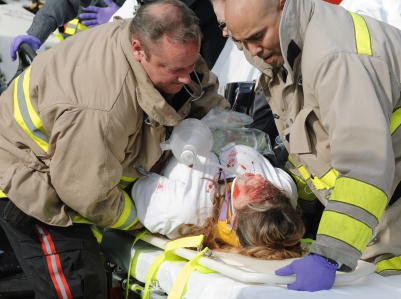
On scene we find first responders assisting an unconscious male sitting slumped over in a Target bathroom.
“His blood sugar is 12,” one of the firefighters tells me. “He works here and his co-workers say he takes insulin daily.”
“Sir?” I say to the patient. “Can you hear me?”
No response. His eyes are half open. His pupils are dilated and sluggish.
My partner and I insert a line (IV), and push one 25g AMP (ampule) of D50 (dextrose 50% in water). I attach him to our cardiac monitor via a 12-lead (ECG patches), and assess his heart rhythm and all his vital signs. He’s in normal sinus rhythm and all his vits are within normal range; however he’s slightly tachycardic (heart rate too high), but an elevated HR is the body’s defense to survive a hypoglycemic episode (low blood sugar).   
“Sir?” I place my hand on his shoulder. “Hey, buddy, talk to us.”
The patient remains unresponsive, so my partner and I push another 25g AMP of D50.
Via a glucometer, we test his BGL (blood glucose level). It’s now 43. We’re headed in the right direction, but the patient is still unresponsive. We administer 1mg of glucagon IM (intramuscular injection).
“Sir?” I squeeze his hand. “I need you to talk to me. Okay?”
He stirs, his eyes attempt to focus. We load him onto our stretcher and wheel him inside our ambulance. Within a few minutes, he stares at me. “Where am I?”
“You’re in an ambulance, sir. I’m EMT Benson.” I finish retaking his BGL again. It’s now 98 (within normal limits). “Do you know what happened?”
He nods. “Yeah. It happened again. Twice this week. Stupid blood sugar.”
Can you tell me your name?” I ask, even though I know his personal information via his co-workers. I start this line of questioning to assess the patient’s mental status.
“Bob.”
“Okay. Bob, what’s your birthday?”
“Ah…February 3, 1972.”
“Uh-huh. Gosh, Bob, my math is horrible. How old does that make you?”
“Thirty-nine, but don’t tell my girlfriend. She thinks I’m thirty-one.”
I laugh. “I won’t say a thing, but you may want to tell her yourself soon, what do you think?”
“You’re probably right.” 
“You take insulin, I hear. Did you take any today?”
“45 units, early this morning.”
“45, huh? Have you eaten anything today?” I note the time is twenty minutes past noon.
“Two graham crackers.”
“You need to eat more than that, you know? Especially after 45 units. Breakfast is the most important meal of the day. Promise me you’ll eat breakfast everyday.”
He nods as he smiles at me. 
I radio the hospital. “Wake Med, EMS 4 en route with pt (patient) initial BGL 12, then 43, now 98. We’ve given 2 AMPS of 25g D50, and 1 mg of glucagon. Initially pt was unresponsive, now A&O times 4 (alert and orientated times 4). Vitals within normal limits. ETA 2 minutes.”
“ED room on arrival. Wake Med out.”
“EMS 4 out.”
*****************************************************************************
After majoring in communications and enjoying a successful career as a travel agent, Dianna Torscher Benson left the travel industry to write novels and earn her EMS degree. An EMT and Haz-Mat Operative in Wake County, NC, Dianna loves the adrenaline rush of responding to medical emergencies and helping people in need, often in their darkest time in life. Her suspense novels about characters who are ordinary people thrown into tremendous circumstances, provide readers with a similar kind of rush. Married to her best friend, Leo, she met her husband when they walked down the aisle as a bridesmaid and groomsmen at a wedding when she was eleven and he was thirteen. They live in North Carolina with their three children. Visit her website at http://www.diannatbenson.com 

EMS Call: Respiratory Arrest

Dianna is back for her monthly EMS post. I’d like to pass along my congratulations to her for winning in the ACFW Genesis contest this year! This is a much sought after award and will turn the heads of editors her way. I know we will be seeing her books published in the coming years.

Today, she focuses on the aspects of a respiratory call. This will help add those factual details for your scenes.

EMS 18, respiratory distress at 1234 Greene Road, at 1234 Greene Road on TACH channel 7.
joeyvest
As we climb into our ambulance posting (parked) at our station, my partner and I radio in we’re en route to the above scene. Lights and sirens, we rush out of the garage. En route, we’re notified via our computer that the patient is a 24-year-old female and is conscious and breathing.
Once on scene, we find the scene is safe and no dispatched law enforcement. Typically a fire crew arrives on scene first (prior to us) since there are about three times more firehouses than EMS stations globally, thus they’re closer than we are. However, fire is not always dispatched along with EMS, so for this sample EMS call we’ll say fire wasn’t dispatched.
Upon our arrival at the patient’s side, my general impression of her is she’s SOB (short of breath) and in respiratory distress (dyspnea). She’s sitting in the tripod position (leaning far forward with her palms on her kneecaps) and she’s breathing shallow and fast (tachypnea). She’s not cyanotic (blue lips or fingernail beds), so she’s perfusing fine at the moment and not hypoxic (lack of efficient oxygen), but that can quickly change.
I won’t discuss everything we’d do on a respiratory call like this, but if you need clarification or further explanation for your fictional writing needs, please do not hesitate to ask me.
julezcourt
As my partner whips out a non-rebreather mask and connects it to the oxygen tank at 15 lpm (liters per minute) then slips it over her mouth and nose, I assess her breathing rate and quality and find it definitely out of range, certainly labored and not efficient to sustain life, so I assemble a BVM (Bag Valve Mask), and my partner bags her.
As I continue with my patient assessment, and notice she’s diaphoretic (cold and clammy skin) I consider assembling a nebulizer (I’d squeeze atrovent and albuterol into a tiny circular plastic cup and attach the nebulizer contraption to the NBR (non-rebreather).
I attach her to our cardiac monitor via a 12-lead (ECG patches) to interpret her heart rhythm and heart rate, and I slip a pulse-ox on her finger (pulse-ox is attached to the monitor) to obtain her blood oxygen level.
I won’t go into any detail about heart rhythms, but I’ll simply say she has a dysrhythmia, her heart rate is at 118 (tachycardia = too fast), and her SAT is 87% (blood oxygen saturation), which is too low. Via my stethoscope, I auscultate her lungs and heart. I hear normal heart sounds, but I hear rales in her lungs. We insert a line (IV).
Our patient falls unconscious, and remains unresponsive. Cyanosis (blueness) begins to appear. She still has a pulse, but she’s no longer breathing, so she’s in respiratory arrest (apnea).
Based off my assessment and what information I gained from her roommate on-scene, I believe the diagnosis is pulmonary edema (various causes that I won’t go into). As I assemble the CPAP—Continuous Positive Airway Pressure—and attach it to her face, my partner pushes (inserts into the line) vasotec and fentanyl.
We place her onto our stretcher and load her into our ambulance for transport. En route, I monitor and reassess her constantly, perform any and all interventions as necessary, and retake all vital signs very five minutes.    
Thank you in advance for reading and for your comments.
******************************************************************************* 

After majoring in communications and enjoying a successful career as a travel agent, Dianna Torscher Benson left the travel industry to write novels and earn her EMS degree. An EMT and Haz-Mat Operative in Wake County, NC, Dianna loves the adrenaline rush of responding to medical emergencies and helping people in need, often in their darkest time in life. Her suspense novels about characters who are ordinary people thrown into tremendous circumstances, provide readers with a similar kind of rush. Married to her best friend, Leo, she met her husband when they walked down the aisle as a bridesmaid and groomsmen at a wedding when she was eleven and he was thirteen. They live in North Carolina with their three children. Visit her website at http://www.diannatbenson.com 

Personal Protective Equipment (PPE)


Dianna Benson is back for her monthly post discussing the different types of personal protective equipment healthcare professionals wear in different types of situations. As a writer, these will help you write authentically.

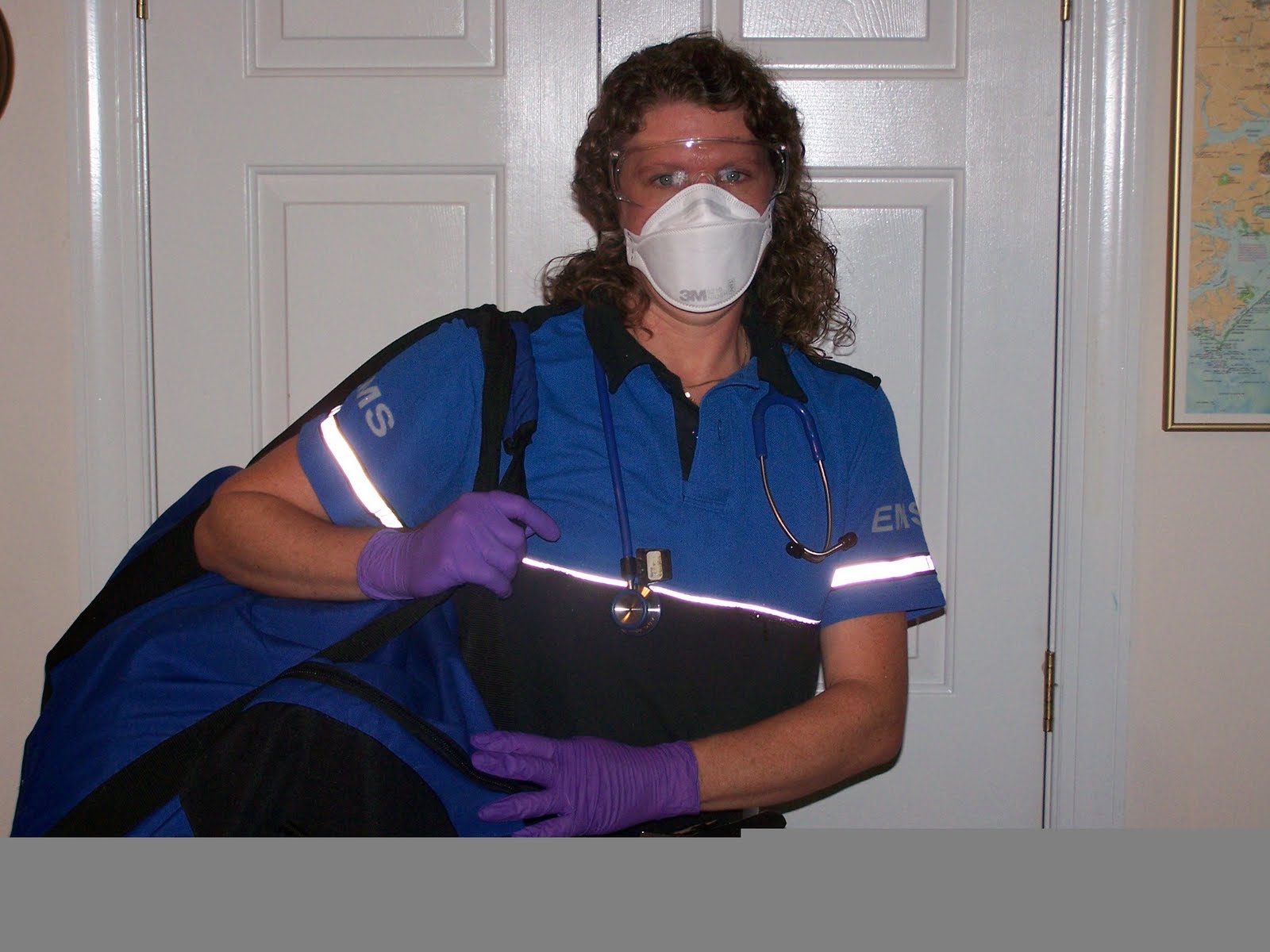
As an EMT, a Haz-Mat-Operative, and a FEMA Mass Casualty Incident Operative, PPE (Personal Protective Equipment) is vital to my safety and health. At a bare minimum, I wear medical gloves and wash my hands post removing those gloves. At a maximum, I wear my bio hazard suit, head to boot, complete with full face respirator, air tank and haz-mat outer gloves.

Depending on the type of EMS call and the situation, I could wear one, all, or a combination of the following PPE: long armed and legged paper gown, plastic face shield, plastic eye goggles, a HEPA or N95 (mouth and nose surgical mask), and a helmet. In a MVC (motor vehicle collision) I wear a bright yellow traffic vest stamped with EMS on the back. If I need to climb inside a damaged vehicle on scene to medically examine, assess, and treat a patient as well as help extricate them onto a backboard and stretcher, I wear my turn out gear: heavy thick pants, coat and gloves over my EMS uniform and medical gloves, plus I wear a helmet with a thick plastic face shield and I slip the yellow traffic vest over the coat.

If I have a blood borne pathogen exposure via a contaminated needle or a patient’s mucous membranes, blood, urine, vomitus, feces, etc. or an airborne pathogen exposure, I immediately contact my district chief 24/7. Within minutes, my district chief will inform the EMS medical team and they will advise me on how to proceed in seeking medical care for myself.
Never in the history of EMS, fire or law enforcement have any of us contracted HIV while performing our duties due to the fact the HIV virus dies once it’s exposed to either air or light. Hepatitis C and MRSA (Methicillin-resistant Staphylococcus Aureus) are two diseases I’m concerned about contracting from a patient. Unlike Hepatitis A and B (both of which I was vaccinated against before my first EMS shift back in 2005) there currently is no Hepatitis C vaccination. Along with about most of the rest of the world, I probably already have MRSA cells in my system and they’ll never cause me any harm, but if I do become systematic with MRSA, it could be an arduous process to heal or I may never heal. However, I just follow PPE guidelines and leave it in God’s hands.
On the start of my every shift, I attach my tiny blue plastic name plate to the ceiling of my ambulance via Velcro. The name plate says: D. Benson. This name plate is mostly for a MCI (Mass Casualty Incident) or a structure fire, but can be helpful in any situation and is used for the following reason: When I enter a scene, my name plate will inform all other rescue personnel, especially EMS, who exactly went into a structure or scene without anyone having to waste precious time researching that information.  
Can you think of specific situations where I’d wear certain equipment? Hint: A long armed and legged paper gown I’d wear when I deliver a baby.
Thank you in advance for reading and for your participation and comments. If you have any questions, please do not hesitate to ask.
*****************************************************************************
After majoring in communications and enjoying a successful career as a travel agent, Dianna Torscher Benson left the travel industry to write novels and earn her EMS degree. An EMT and Haz-Mat Operative in Wake County, NC, Dianna loves the adrenaline rush of responding to medical emergencies and helping people in need, often in their darkest time in life. Her suspense novels about characters who are ordinary people thrown into tremendous circumstances, provide readers with a similar kind of rush. Married to her best friend, Leo, she met her husband when they walked down the aisle as a bridesmaid and groomsmen at a wedding when she was eleven and he was thirteen. They live in North Carolina with their three children. Visit her website at http://www.diannatbenson.com 

Remember Me: Use of Amnesia in Fiction

Heidi asks:

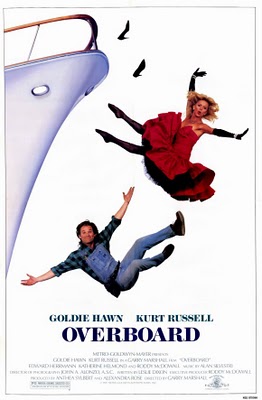
My question is, if I have a character that drowns but is revived, could they have temporary amnesia, especially if they hit their head? If so, how long might it last?  A few days? I know Goldie Hawn’s character in Overboard gets amnesia after falling off a boat into the water, but I’m not sure how accurate that really is.

Dianna says:
The definition of drowning: A submersion event where a patient is pronounced dead within 24 hours of the event.
 If a patient dies 24 hours post the event, it’s called a drowning-related death.
That said, your character did not drown and was then resuscitated. Instead, your character suffered a near-drowning event. In order for it to be referred to as a near-drowning event, the patient must be treated for at least one submersion-related complication. You say your character was resuscitated, so I’m assuming the patient was in cardiac arrest, which would definitely be considered a submersion-related complication.
Detail to consider: How long was the patient in cardiac arrest? In cold water, the mammalian diving reflex can prevent death, even after prolonged submersion (a patient in cardiac arrest can be resuscitated after 30 minutes or even longer).
I’d definitely write in that the character hit their head somehow and then suffered a prolonged cardiac arrest due to the submersion post hitting their head. (Basic background information: If the human body loses its oxygen supply, the heart stops. Since we can’t breathe under water, we’re unable to in-take oxygen.) If cold water isn’t fitting for your story, then lower the cardiac arrest time to 5-10 minutes, which is still long. The amnesia could occur simply from the trauma to the head only. The near-drowning event and long cardiac arrest time could worsen the amnesia.         
Anterograde amnesia: Memory disorder only affecting the retention of new information and events. Example: Patient Jim can only identify his friends, recall their names, retell stories about them ONLY if he knew them BEFORE the amnesia. So, when Patient Jim meets anyone after suffering with amnesia, it doesn’t matter how much time he spends with them, next time he sees that person he won’t remember them at all.   
Retrograde amnesia — Memory loss of the past or segments of the past.
Some patients can suffer with both anterograde and retrograde.
Some patients fully recover from amnesia, some don’t.
Every patient is truly unique with every medical situation — how one patient’s body responds medically, another patient responds completely different. So, you could write whatever you want (within reason) with amnesia and it would be realistic. Again, every patient is very different.
In Overboard, that character’s memory returned in a very realistic manner. What happened was she had a strong visual (her husband) of her past, which triggered her brain to remember her past, and pop her memory returned. Sometimes memory return is gradual, other times it comes all at once. However, the situation with her simply falling into the water and losing consciousness then coming to in the hospital with amnesia is over the top Hollywood. If I remember correctly, the storyline was that the cold water and the experience itself (floating in the ocean for hours), was the cause of amnesia.
Sure, it’s possible (again, everyone is different) but not a solid storyline. To me, what that storyline says is the amnesia is an emotional issue (the floating experience, plus not being happy in her life), not a medical issue, which is definitely possible, but they should’ve highlighted that point. Or, adding in head trauma would’ve made it an even better story.   
The tricky thing about amnesia (but it’s good for writers) is it deals with the brain, an organ us humans will never be able to truly understand like we do all other organs and systems, so we have little knowledge on how or why some things occur or don’t occur with: memory, personality, personality disorders, mental illness, etc.     

Dangerous EMS Scenes

This month, Dianna focuses on when EMS scenes become unsafe. Do these give you any new ideas for your novel?

When Safe Scenes Turn Dangerous

Unlike inside a hospital, EMS operates in uncontrolled settings and environments. At any given moment a scene can and does suddenly become unsafe for us while we’re in the process of medically treating a patient.
As an EMS crew is enroute, responding to a 911-Call, if Dispatch informs us PD (police department) or LEOS (law enforcement officers) are also being dispatched, a crime has possibly been committed or the scene may somehow be unstable or unsafe. However, all rescue personnel on scene is responsible for his/her own safety. We can’t depend on PD or LEOS to protect us; instead, we must follow our own protocols and work the scene with all other rescue crews effectively. Regardless if PD or LEOS are on the scene with us or not, safe scenes can and do suddenly become unsafe in various ways with little to zero warning as we’re at the patient’s side giving medical care.
The patient, the patient’s loved-ones, or bystanders can suddenly become violent or their behavior can drastically change due to: mental illness, fear, anxiety, drugs or alcohol, declining medical condition, they’ve committed a crime on scene, they’re a desperate criminal with a concealed weapon, etc. altering the safe scene to a dangerous situation.
I can’t go into detail, but I’ll share the basics of two scenes that turned unsafe for me and my partner: 1) An attempted suicide patient – a prison inmate – grabbed a police officer’s weapon. We physically and then chemically restrained the man without anyone getting injured, but it wasn’t easy or quick. 2) Adult children of a bi-polar patient called 911 because their father became disoriented and agitated. After our arrival, the patient turned aggressive and combative. I called for PD back-up, but instructed them not to use force unless absolutely necessary. I used the talk-down technique to calm him as I also reassured and counseled his adult children. After an intense hour, I finally had the patient physically and chemically restrained in my ambulance.
Hazardous material are another safety concern – if an EMS crew is dispatched without the knowledge haz-mats are on scene, our lives and health are at risk. Immediate recognition of haz-mats and following of procedure is essential, but at times haz-mats are disguised and sometimes a human (for various reasons) is setting up and controlling that disguise. Can you guess why an individual(s) would do this? I’ll give you one idea to get the ball rolling – meth labs (which are easy and cheap to construct) can easily explode. 
EMS crews use code phrases to alert each other of danger. One old code phrase: “Let’s get the red oxygen cylinder out of the ambulance.” After speaking a code phrase or hearing it, I evacuate the area, notify Dispatch of the situation, and request for additional resources as necessary.
Severe weather creates a large range of dangers as well as hindrances for an EMS crew, including: hurricanes, tornadoes, earthquakes, floods, blizzards, downpours, intense wind gusts, extreme lows or highs of air temperature, etc. A darkened mile-long tunnel when electricity is not functioning causes additional issues; so does nighttime darkness, especially if the emergency situation is on a back country road with only the half-moon above lighting the scene. Weather related issues can be on-going during a shift and worsen, or occur suddenly with no warning.
The worst weather-related scenario I’ve worked: A multi MVC – motor vehicle collision – at night on a darkened section of a highway. While we were extricating the severely injured and trapped passengers and drivers down a wooded embankment, a downpour suddenly began and refused to let up. The raven’s ground was previously saturated from days of rainfall. Lightening and thunder added to the already dangerous and intense situation.  
Fires and/or explosions can and do erupt suddenly while we’re on scene, unstabilizing structures and creating yet another danger for us as well as our patient and any bystanders.
What other scenarios can you think up that would suddenly create an unsafe environment for an EMS crew, and how do you think we handle those situations?
Obviously, as EMS we need to be prepared for anything at all times as well as be able to adjust and respond effectively when our surroundings change on scene
Thank you in advance for reading and for your participation and comments. If you have any questions, please do not hesitate to ask.
****************************************************************************

After majoring in communications and enjoying a successful career as a travel agent, Dianna Torscher Benson left the travel industry to write novels and earn her EMS degree. An EMT and Haz-Mat Operative in Wake County, NC, Dianna loves the adrenaline rush of responding to medical emergencies and helping people in need, often in their darkest time in life. Her suspense novels about characters who are ordinary people thrown into tremendous circumstances, provide readers with a similar kind of rush. Married to her best friend, Leo, she met her husband when they walked down the aisle as a bridesmaid and groomsmen at a wedding when she was eleven and he was thirteen. They live in North Carolina with their three children. Visit her website at http://www.diannatbenson.com/ 

Haz-Mat Decontamination

Dianna’s back for her monthly blog post. Today, she focuses on HazMat Decon (otherwise known as cleaning gross stuff off of you that could kill you). I particularly love the photos she included to help aid the writer with those accurate descriptive details. Don’t forget, leave a comment this month and be eligible for Brandilyn Collin’s book Over the Edge. Winner announced June 1, 2011.

This is amazing fodder for any author to add conflict and tension to a disaster situation. Decon can also be used on a very small scale as Dianna mentions. Possibly only one patient. Imagine a patient drenched in gasoline. Not only can the gas be caustic to the patient’s skin, but if that patient is brought into the ED, the fumes will permeate the department. This can pose a risk to other patients, particularly those with respiratory complaints.

Welcome back, Dianna!

HAZ-MAT Decontamination
OSHA definition of decon: The removal of hazardous substances from employees and their equipment to the extent necessary to preclude foreseeable health effects. 
NFPA (National Fire Protection Agency) definition: The physical and/or chemical process of reducing or preventing the spread of contamination from person and equipment.
Inclusive definition: The systematic process of removing or chemically changing a contaminant at the scene to prevent the spread of that contaminant from the scene and eliminate possible exposure to others.
Contaminants are any chemical or biological compounds or agents capable of causing harm to people, property, or the environment and includes:
1)      Bloodborne pathogens
2)      Common chemicals
3)      Warfare agents
4)      Etiological agents
5)      Radiological agents

Decon is located in the warm zone of an emergency incident, which is in between the cold zone and the hot zone. Once rescue personnel exit the hot zone, we must enter the warm zone and decon before entering the cold zone. Haz-mat trained and credentialed EMTs wear head-to-toe biohazard suits and enter haz-mat areas/situations to assess patients, give them medical care, and extricate them out of the hazardous hot zone to the decon area. There are five decon stations.
1)      Initial entry: I drop my loose (not attached to me) instruments and tools in buckets.
2)      Gross Rinse: While I’m still fully clothed in my bulky biohazard suit, another person thoroughly rinses me off (and everything on me) with a wand (think: high-powered spray hose). Rinsing off includes the bottom of my boots, my hooded head, my SCBA tank (self-contained breathing apparatus) etc. That person basically sprays me with water while I lift each foot one at a time, turn around, lift my arms, etc. 
3)      Wash and Rinse: I’m still in my suit when yet another person first thoroughly scrubs me with a brush wand filled with soapy water, then uses another wand containing water only.
4)      I remove my biohazard suit and SCBA tank, place both in large buckets.
5)      I remove my haz-mat gloves then my inner gloves (medical exam gloves) and place all in buckets.
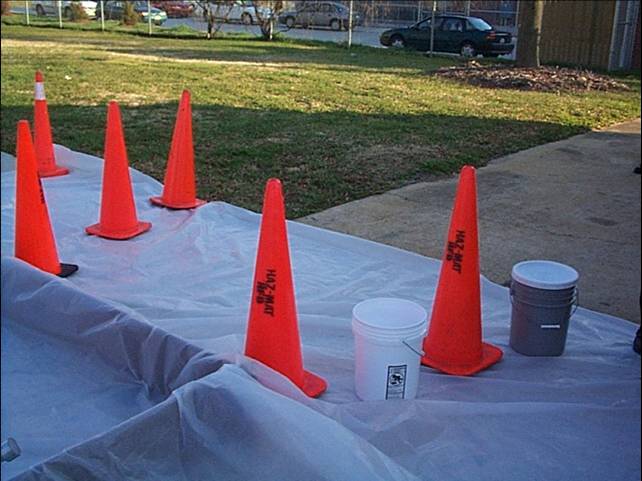
      Each station is separated by wooden squares about the size of a washer/dryer unit and stands no higher than ten inches from the ground. Each square is lined with heavy polyethylene plastic (the wood is underneath the plastic), so the poly sheeting contains the run-off successfully.
Set-up crews arrange the five stations by first laying down thick polyethylene sheeting flat on the ground, then constructing the wooden dividers into position over the poly, then spreading a second poly sheet over all the dividers, then firmly stepping on every inch of the poly inside each square, form-fitting it into the square. Finally, heavy orange cones secure the poly in place. The stations are literally next to each other, so during the decon process all we do is simply step over the wooden divider and into the next station to be deconed.
The five stations – as well as the entry and exit of decon – are in open space; meaning, there’s no roof or ceiling above the decon area. All hazardous materials either successfully collect into the polyethylene sheeting (then both the poly and haz-mats are later properly disposed of), or they disintegrate harmlessly into the air, or a combination of the two. 
This decon system works well for any size situation from one emergency crew to large crowds of haz-mat exposed civilians (non-rescue personnel). In an Emergency MCD (Mass Casualty Decon) time is critical for several different reasons: health risks, scene control, perseverance of crime scene evidence, etc. so a structured decon is not possible. In those emergency situations, exposed emergency personnel and civilians are deconed as shown in the two photos.
Thank you in advance for reading and for your participation and comments. If you have any questions, please do not hesitate to ask. All the photos are courtesy of Brandon Gayle. 
**************************************************************************

After majoring in communications and enjoying a successful career as a travel agent, Dianna Torscher Benson left the travel industry to write novels and earn her EMS degree. An EMT and Haz-Mat Operative in Wake County, NC, Dianna loves the adrenaline rush of responding to medical emergencies and helping people in need, often in their darkest time in life. Her suspense novels about characters who are ordinary people thrown into tremendous circumstances, provide readers with a similar kind of rush. Married to her best friend, Leo, she met her husband when they walked down the aisle as a bridesmaid and groomsmen at a wedding when she was eleven and he was thirteen. They live in North Carolina with their three children. Visit her website at http://www.diannatbenson.com/