I’m so happy to be back blogging! I hope everyone had a fantastic holiday season and is ready for a new year. Today is officially my 20th wedding anniversary! Can you believe that? I know I can’t. It’s crazy to think how much time has gone by.
 Considering the occasion, I thought it would be best to write a positive (well, mostly positive) review of a new TV show— Fox’s series 9-1-1. I know . . . you can pop your eyeballs back in. This is truly a rare event considering much of this blog’s time is spent skewering medical inaccuracies in print, movies, and the small screen.
9-1-1 is a series devoted to dispatch, police, and fire calls. I’ve watched the first two episodes and was pleasantly surprised at how much I liked it. Now, it does have some problems. Writing completely to stereotype would be the biggest.
Let’s look at what they did well.
1. The characters face consequences for their actions. I’ve said all along that it’s okay for medical people to do bad things in fiction, but there must also be consequences for their actions. The point of this are many. It increases the conflict in the story AND reflects real life. Too many times in fiction medical people are shown doing bad things without consequence. One firefighter is shown facing some serious repercussions for his poor (saying that lightly) choices.
2. There is respect for HIPAA and also how hard that is for medical people. HIPAA is the patient privacy law. Because of HIPAA, most of us who work on the front lines (EMS and emergency departments) rarely ever hear how our patients do after they leave our care. This is, flat out, not easy for any of us and it makes closure difficult.
3. Shows the problem of poor coping mechanisms. It is true that healthcare people do not always have the best coping mechanisms. Hello, to all the nursing units with the mandatory chocolate drawer. Some develop addictions and can have bad co-dependent relationships. It was nice to see highlighted that the stress of this work does take an emotional toll.
4. Highlights the difficulty of work/life balance. Of course, all professionals face work/life balance issues, but I also feel like the nature of our work makes it hard to feel like you’re getting a break. If you’re taking care of a medically/terminally ill loved one at home, and then go to work doing the same thing— there can be little room to breathe.
5. Medical information was not distracting. The medical information was kept pretty light in the first two episodes and not too distracting. There were a few minor medical errors I’ll keep close to the vest for now.
Have you watched the new Fox show 9-1-1. What did you think?
 Sadly, we know this reality is not true. The pediatric nurse understands and confronts this reality more often than most. Particularly nurses who work critical care, ER, oncology, and hospice.
 I have two scenarios in a novel I’m writing that I could use your help with.
 I assume the child who is fine would go with them if the police haven’t been called. The woman is from out of town and knows no one in the city so the child can’t be picked up by anyone. The mother has a concussion and is kept overnight for observation. I am most interested in learning what would happen with the child at the point that they arrive at the ER while the mother is being examined.
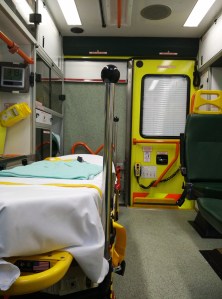
 When found, she has a pulse, but is not breathing. Rescue breathing is started within thirty seconds of rescuers reaching her. She coughs up water shortly thereafter and is breathing on her own by the time the ambulance arrives.
 First, the man who threw the switch is thrown onto the floor and sparks are showering down on him and his clothes. He is pinned beneath a shelf that he knocked over. The second man takes his jacket and tries to put out the flames while others pull the shelf off the man on the floor. The second man’s arm and hand are burned trying to put out the fire, and keep the sparks from falling on the man on the floor.

 Redwood's Medical Edge