In Episode 3 of 9-1-1, the story opens with officer Athena Grant, played by Angela Bassett, finding her daughter unconscious from taking hydrocodone pills as seen in the trailer below. The daughter, who appears to be between twelve and fourteen, is whisked off to the hospital and admitted to the ICU in short order. One, did they treat this ingestion (or overdose) correctly? Two, would this type of ingestion warrant ICU admission?
It’s stated in the episode that the daughter took “six to seven” hydrocodone pills. Hydrocodone is a combination of acetaminophen (Tylenol) and a synthetic type of codeine. It comes in many different preparations with different amounts of acetaminophen and hydrocodone. Where do we start to evaluate whether or not the ingestion is worrisome?
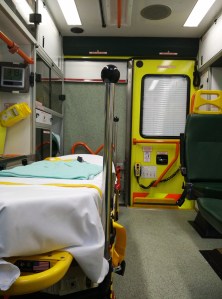
1. How is the patient? What signs and symptoms do they have? The EMS crew in this situation is lucky. The mother knows exactly what the daughter took. She presents unresponsive with slow breathing. Number one treatment in this situation after assisting with her breathing? Give Narcan which this crew absolutely does not do. Narcan is a reversal agent for opioids. It can be given via a mist up the nose so you can generally reverse the sedative effects of the drug without even starting an IV. It is a life saving measure because it is the not breathing part that will kill you first. This is the medication they should have given first.
In absence of knowing exactly what the patient took, we can look at clusters of signs and symptoms called toxidromes which might point us in the right direction.
2. What did the patient take? When did they take it? How much did they take? Many drugs have multiple components and we have to evaluate EACH component and whether or not this could prove harmful to the patient. The opioid (once reversed with Narcan) is probably the least concerning. The amount of acetaminophen ingested is our next priority and we would calculate how many milligrams per kilogram she took. We know for acetaminophen that when you start to get between 100-150mg/kg that there could be a potential for liver damage. There is a reversal drug for acetaminophen’s damaging effects on the liver called Mucomyst, but there is a window in which this can be given to be effective. Usually, a poison control center will help us manage these types of patients.
In this case, let’s say she took six pills of Lortab 7.5/500. From this we know that each pill has 500mg of acetaminophen. Assuming the average 12-14 y/o is about 100 lbs (converted to 45 kg) then she took about 66mg/kg of acetaminophen. A four hour Tylenol level (measured four hours after the ingestion) would be checked to ensure she wasn’t toxic, but in this case likely not.
3. Will this patient be admitted to the ICU? It might come as a surprise, but ingestions of medications are most often not admitted to the ICU. Most are managed and observed in the ER. In this case, the girl should have been given Narcan by EMS. We would continue to watch for the somnolent effects of the opioid and evaluate the risk of the acetaminophen.
Also, it’s generally protocol that an aspirin level is measured as well even if the patient denies taking any. We can’t always depend on the patient being truthful about what they took and aspirin can have very devastating effects as well. Other labs depend on the medication ingested and what parts of the body if affects. This patient would likely not be admitted to the ICU.
Also, if we get a toxic ingestion within an hour we can give activated charcoal (that literally looks like black sludge) that will bind the medication. This is not always done for several reasons. One is the risk of the charcoal ending up in a patient’s lungs during administration. Usually this is done under the recommendation of Poison Control.
4. Do we notify Child Protective Services? In this episode, Child Protective Services conducts a mental health exam on the teen. In the real world, this evaluation takes place through mental health providers not associated with the state. State involvement is generally reserved for what we would consider a risky home environment. A teen getting into their parents medicine cabinet for some pills would not fall into that category. What would? A two-year-old ingesting crack cocaine that was lying around the home. Each case is handled very individually, but this case presented in 9-1-1 would not rise to that level in my opinion.
As a side note, parents are not separated from their children during medical treatment. Can we please stop perpetuating this myth?
What do you think of 9-1-1?
 Considering the occasion, I thought it would be best to write a positive (well, mostly positive) review of a new TV show— Fox’s series
  Sadly, we know this reality is not true. The pediatric nurse understands and confronts this reality more often than most. Particularly nurses who work critical care, ER, oncology, and hospice.
 I have two scenarios in a novel I’m writing that I could use your help with.
 I assume the child who is fine would go with them if the police haven’t been called. The woman is from out of town and knows no one in the city so the child can’t be picked up by anyone. The mother has a concussion and is kept overnight for observation. I am most interested in learning what would happen with the child at the point that they arrive at the ER while the mother is being examined.
 When found, she has a pulse, but is not breathing. Rescue breathing is started within thirty seconds of rescuers reaching her. She coughs up water shortly thereafter and is breathing on her own by the time the ambulance arrives.
 First, the man who threw the switch is thrown onto the floor and sparks are showering down on him and his clothes. He is pinned beneath a shelf that he knocked over. The second man takes his jacket and tries to put out the flames while others pull the shelf off the man on the floor. The second man’s arm and hand are burned trying to put out the fire, and keep the sparks from falling on the man on the floor.




 Redwood's Medical Edge