As I shared in my last post, I was working as a nurse during the COVID-19 pandemic– at the very dawn of it. Looking back, many I know are very blase about what it really was and what happened. It doesn’t help that each political side dug into their version, and it seems transparency and truth telling have succumbed to political power.

I cannot tell you how brave every front-line healthcare worker was to show up to work every day dealing with the unknown. From first responders (firefighters, police, and EMS), to CNA’s, to nurses, to respiratory therapists, and to doctors. Many health professionals assisted in any way they could– perhaps operating outside of their normal comfort zone just to save lives. Everyone who was working was putting their lives at risk. We didn’t know clearly how COVID-19 spread, what were the best therapies to treat, and what patients were more at risk. We were operating in darkness.
At the beginning of the pandemic, it looked very dire for those that went into the hospital. In those early days, if you ended up on a ventilator, you had a very high risk of mortality. Estimates vary wildly but let’s say a median good guess was around 75%. That’s not great.
My mother-in-law, who just turned 94 this year, visits us twice per year between her Minnesota and Arizona stays (yes, she’s a snowbird). In 2020, I told my husband I didn’t believe it was wise to have her come and stay with us as I didn’t want to be the one responsible for giving her an illness that no one knew who would live or die. She bypassed us and went to stay with her son and daughter-in-law that live in Cedar Rapids, Iowa.
I breathed a sigh of relief, thinking she was safe. None of them work in healthcare.
What happens? They all get COVID. My then 90 y/o mother-in-law, her son, my sister-in-law, and my niece. Age ranges from 20 to 90. Who gets sickest and needs to be hospitalized? My brother-in-law ended up needing to be on the ventilator. Knowing the early statistics as I did, I told my husband to brace himself. That this may not turn out very well. He thought I was being my normal, crazy, psychotic, healthcare worker that over-exaggerates everything (which, of course, I’m not. He just doesn’t have the inbred worry of every healthcare provider out there).
The good news is that my brother-in-law, after being intubated for three days, was extubated and is 90% recovered from the illness. To this day, he still has some lingering effects. My sister-in-law and niece got ill but didn’t require hospitalization. The least affected? My mother-in-law who got some slight sniffles.
A couple of years after, my husband was doing some reading on the pandemic and came to me and said, “I see why you were so worried about my brother. You were right– lots of people died in those early days who were put on the vent.”
It’s easy to look back in hindsight and think that what all of us who were heavily involved in the pandemic lived through turned out to be no big deal, but it was a VERY big deal.
Lots of death. We honestly didn’t know if we would be next. Think about this and please don’t ever tell a healthcare worker who lived through those early days that what they experienced what “no big deal”.
If you’re a healthcare worker, I’m curious as to what your experience was in those early days of COVID-19. I’d love for you to share your thoughts looking back. What do you want people to know?
 However, when it comes to medicine, historical might be considered a time frame of more than ten to twenty years ago because of the rapidly evolving nature of the practice of medicine. One example of this would be CPR guidelines. Did you know CPR guidelines generally change every five years? To put it simply, the way we are doing CPR now is not the way it looked even ten years ago. Often times, what a writer might consider a contemporary medical question is truly a historical one.
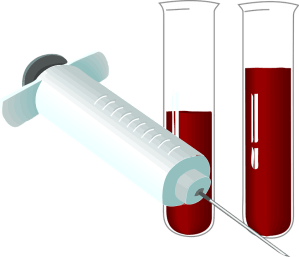 Can a vaccine or antidote be made using a blood sample? Also, what would be the proper term for this? Is it a vaccine, antidote, or a serum?
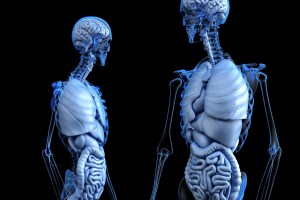 1. Would one be required to go to the hospital for a bullet graze?
 Hi Fraidy! Thanks so much for sending me your question.
 1.
1.  and beds that lack the comfort of home. However, while watching an episode of
  Luxury three-bedroom, two bath suites, beautiful living and dining areas with sweeping views of the city await them when admitted. Kate Hudson, Victoria Beckham and the Kardashian sisters have all experienced the posh treatment when delivering their babies.
 As for the average Joe, our wallets can’t afford the four thousand dollar a night stay. Our rooms are less ornate. We get one clean bedroom, one small bathroom, mediocre food from the cafeteria and bland furnishings. No personal doula for us although, breast feeding centers and coaches are available.
 gospel truth of Jesus Christ. Her stories dive into the healthcare environment where Shannon holds over twenty years of experience as a Registered Diagnostic Medical Sonographer. Her extensive work experience includes Radiology, Obstetrics/Gynecology and Vascular Surgery.
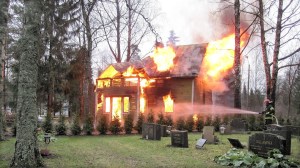 With burns to the back, it would really depend on what percentage of his back is burned. Burns are always calculated in percentages so it’s hard to know exactly what the treatment would be without knowing that number.
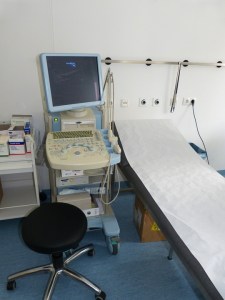 Today, we’ll focus on how to add tension and conflict from real-life scenarios in the ultrasound department.
 Redwood's Medical Edge