Take a humurous look at James Corden and Tom Hanks acting out his film history in a matter of minutes.
Author: Jordyn Redwood
Christmas Video Blog Break: Tim Hawkins
Our whole family LOVES Tim Hawkins. Hope you enjoy his sense of humor as much as we do.
Christmas Video Blog Break: Emotional Interview with Vince Vaughn
Jimmy Fallon is one of my favorite late night television hosts and these emotional interviews are very entertaining. Plus, if you’ve read my Bloodline Trilogy then you should love Vince Vaughn as that’s who inspired Detective Brett Sawyer.
Enjoy!
Christmas Video Blog Break: The Christmas Story According to Kids
Sometimes, the best explanations are from the mouths of children. Hope you love this rendition of the Christmas Story.
Merry Christmas!!
Christmas Video Blog Break: Mad Lib Theater
This funny video featuring Jimmy Fallon and Benedect Cumberbatch performing Mad Lib Theater had me laughing out loud.
Hope you enjoy it as well.
Christmas Video Blog Break: Reggie Rivers
It’s been my tradition ever since I started blogging to take a two week break over Christmas to share funny and/or inspirational videos as my Christmas present to you. Regular blog content will resume January 2nd, 2017.
Recently, I had the privilege of hearing former Broncos player, Reggie Rivers, give a speech at a leadership conference. He was AmAzInG. Seriously.
Always when the New Year hits it becomes a time of reflection and goal setting.
Listen to Reggie offer suggestions on how you can achieve those New Year’s Resolutions.
Sarah Sundin: WWII Nursing Part 3/3
This is Sarah’s final installment concerning her research into WWII nursing. I want to thank Sarah for all the great information she provided. I know I learned a lot. What was one interesting thing you learned?
Click the links for Part I and Part II.
 US Army Nursing in World War II—Part 3
“Lieutenant Holmes is going into anaphylaxis.”
Harriet’s elfin face blanched. “Oh no. Thank goodness Dr. Sinclair is on the ward.”
“Not yet.” Ruth grabbed a tray and put two sterilized syringes on top.
“So—so why are you already getting the meds?”
“I want to be ready when he comes. I can’t waste any time.” One vial of adrenaline.
“But he hasn’t ordered them yet.”
Ruth leveled a look at the girl. “I know the treatment for anaphylaxis.”
“That—that’s presumptuous of you. You’ll make the doctor angry.”
Ruth pulled a vial of morphine. “I don’t care about the doctor’s feelings. I care about my patient’s life.”
In my World War II novel, A Memory Between Us, the heroine, Lt. Ruth Doherty, serves as a US Army Nurse in England. The amount of research seemed daunting, but I found fantastic resources, read intriguing real-life accounts, and gathered fascinating facts about nursing in World War II.
On November 24th, I covered requirements to serve in the Army Nurse Corps. On November 26th, I discussed the training the nurses underwent and rank in the Army Nurse Corps. And today I’ll provide some details on uniforms, nursing practices, and a list of my favorite resources.
Uniforms
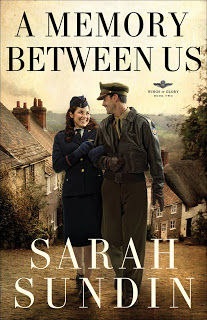
On the job, nurses wore a white ward dress with the white nurse’s cap. They were also issued a set of “dress blues,” a dark blue service jacket and a medium blue skirt, a white or blue shirt, black tie, black shoes, and a dark blue garrison cap or service cap. This uniform is pictured on the cover of A Memory Between Us. A dark blue cape lined with red and an overcoat were also used for outdoors wear. Starting in July 1943, the blue uniform was replaced with an olive drab service jacket and skirt and cap, khaki shirt and tie, and brown shoes—but implementation was slow and sporadic.
In combat areas, white ward dresses and skirted suits were absurdly impractical, but the Army was slow to provide appropriate clothing for women. In 1942 during the early campaign in North Africa, the women resorted to wearing men’s fatigues and boots—in men’s sizes. In time the nurses were issued WAC (Women’s Army Corps) field uniforms and the popular Parson’s field jacket, as well as easily laundered seersucker ward outfits, both dresses and pantsuits.
Nursing Practice
On the ward, the nurse was assisted by a male medic, an enlisted man. Some men had serious problems taking orders from women, and some didn’t. In stateside hospitals, Red Cross nurses’ aides also served. Physicians entered the Medical Corps with the rank of captain and only male physicians were admitted to the Corps. As was typical in the 1940s, the physicians expected unquestioning, speedy obedience from nurses.
For the writer, it’s important to remember this was long before our disposable, single-use, universal precautions era. Syringes were made of glass and were sterilized in bichloride of mercury before reuse. Gloves were washed and reused—and holes were even patched. Improvisation was the rule, especially in combat areas, and nurses used their creativity and imagination to turn trash into useful items.
Resources
http://history.amedd.army.mil/ANCWebsite/anchome.html (The official website for Army Nurse Corps history.)
Sarnecky, Mary T. “A History of the U.S. Army Nurse Corps.” Philadelphia: University of Pennsylvania Press, 1999. (A comprehensive history with a thick section on WWII).
Tomblin, Barbara Brooks. “G.I. Nightingales: the Army Nurse Corps in World War II.” Lexington: University Press of Kentucky, 1996. (A wonderful history, including all theaters, full of personal stories).
Brayley, Martin. “World War II Allied Nursing Services.” Oxford: Osprey Publishing, 2002. (Detailed information on military nurses’ uniforms).
http://library.uncg.edu/dp/wv/ (The Women Veterans Historical Project—a vast collection of oral histories, letters, photographs, diaries and other treasures).
http://history.amedd.army.mil/books.html (Prepare to get lost…this website contains dozens of on-line historical medical texts, from detailed—800 page!—books describing medical services in each theater, to period textbooks used for neuropsychiatry to infectious disease to orthopedic surgery).
***This blog originally posted 11/29/2010***
********************************************************************************************
 Sarah Sundin is the author of the Wings of Glory series from Revell: A Distant Melody (March 2010), A Memory Between Us (September 2010), and Blue Skies Tomorrow (August 2011). She has a doctorate in pharmacy from UC San Francisco and works on-call as a hospital pharmacist.
Sarah Sundin: WWII Nursing Part 2/3
We’re continuing our three part series with historical author Sarah Sundin about her research into WWII nursing. You can find Part I here.
US Army Nursing in World War II—Part 2
 Ruth hugged her knees to her chest, her dark blue cape tented around her against the gray chill.
Where would the money come from? Promotions were meager in the Army Nurse Corps. All the nurses were second lieutenants except the chief nurse, a first lieutenant. At twenty-three, Ruth was too young and inexperienced to become a chief nurse.
She’d always solved her own problems, but now she longed for advice, and she kept thinking about Major Novak.
In my World War II novel, A Memory Between Us, the heroine, Lt. Ruth Doherty serves as a US Army Nurse in England. The amount of research seemed daunting, but I found fantastic resources, read intriguing real-life accounts, and gathered fascinating facts about nursing in World War II.
On November 24th, I covered requirements to serve in the Army Nurse Corps. Today I’ll discuss the training the nurses underwent and rank in the Army Nurse Corps. And on November 29th, I’ll provide some details on uniforms, nursing practices, and a list of my favorite resources.
Recruitment and Training
The American Red Cross served as the traditional reserve for the Army Nurse Corps. On October 9, 1940, the ANC called the reserves to active duty, to volunteer for a one-year commitment. At first there was no formal military training for nurses. On July 19, 1943, the first basic training center for nurses opened. Training centers were located at Fort Devens, MA; Halloran General Hospital, Staten Island, NY; Camp McCoy, WI; and Brooke General Hospital in San Antonio, TX. The nurses trained for four weeks, learning military courtesy and practices, sanitation, ward management, camouflage, the use of gas masks, and map reading. They also drilled and underwent physical training.
To train the increased number of nurses needed during the war, Congress authorized the Cadet Nurse Corps on July 1, 1943. The government paid for women to attend civilian nursing programs in exchange for service in the Army Nurse Corps upon graduation. The women in this accelerated program (two and a half years instead of three) had their own special cadet uniforms.
Rank
Nurses entered the ANC as second lieutenants, and the vast majority of them stayed at that rank. The chief nurse of a hospital was usually a first lieutenant, but sometimes a second lieutenant or a captain. The highest rank in the ANC was held by the superintendent of the ANC, a colonel.
Even so, nurses held “relative rank.” They held the title, wore the insignia, were admitted to officers’ clubs, and had the privilege of the salute, but they had limited authority in the line of duty and initially received less pay than men of similar rank. On December 22, 1942, Congress authorized military nurses to receive pay equivalent to a man of the same rank without dependents, and on June 22, 1944, Congress authorized temporary commissions with full pay and privileges.
One of the main reasons nurses were granted officer status was to “protect” them from the great crowd of enlisted men, and—it was often thought—for male officers to keep the women for themselves. The Army had rules against fraternization between officers and enlisted personnel.
***This blog originally posted 11/26/2010.***
*********************************************************************************************Sarah Sundin is the author of the Wings of Glory series from Revell: A Distant Melody (March 2010), A Memory Between Us (September 2010), and Blue Skies Tomorrow (August 2011). She has a doctorate in pharmacy from UC San Francisco and works on-call as a hospital pharmacist.
Sarah Sundin: WWII Nursing Part 1/3
Redwood’s Medical Edge is pleased to host historical author Sarah Sundin who has done extensive research regarding nursing during WWII.
US Army Nursing in World War II—Part 1
 “I love this smell, don’t you?” May said.
“Bichloride of mercury?” Ruth laughed and shook water from a pair of gloves. “Only a nurse would like this smell.”
May rolled syringes in a pan of the blue green disinfectant. “In the orphanage I had no control over my life, but with soapy water and a stiff brush, I could scrub away the smells and pretend I lived in a castle.”
Ruth draped the brown latex gloves over a clothesline to dry before being sterilized. “Cleanliness may not be next to godliness, but it beats back the demons of poverty.”
In my World War II novel, A Memory Between Us, the heroine, Lt. Ruth Doherty serves as a US Army Nurse in England. The amount of research seemed daunting at first, but I found fantastic resources, read intriguing real-life accounts, and gathered fascinating facts about nursing in World War II.
Combat produces injuries. Injuries require treatment. If you write a novel set during World War II, you may have to write a medical scene—and you’ll want to get the details right about your nurse characters.
During World War II, 57,000 women served in the US Army Nurse Corps (ANC), 11,000 in the Navy Nurse Corps (NNC), and 6500 in the Army Air Forces. More than two hundred nurses died serving their country.
Today I’ll cover requirements to serve in the Army Nurse Corps. On November 26th, I’ll discuss the training the nurses underwent and rank in the Army Nurse Corps. And on November 29th, I’ll provide some details on uniforms, nursing practices, and a list of my favorite resources.
Requirements
To serve in the Army Nurse Corps, women had to be 21-40 years old (raised to 45 later in the war), unmarried (married nurses were accepted starting in late 1942), a high school graduate, a graduate of a 3-year nursing training program, licensed in at least one state, a US citizen or a citizen of an Allied country, 5’0”-6’0,” have a physician’s certificate of health and a letter testifying to moral and professional excellence.
Pregnancy was the main cause of discharge from the Army Nurse Corps, or as the women called it, PWOP (Pregnant WithOut Permission). To discourage pregnancy, the Army had a cumbersome process to gain approval for marriage. Other methods to prevent pregnancy included careful placement of nurses’ quarters, discouraging drinking, and encouraging the women to socialize in groups. The second main reason for discharge was “neuropsychiatric,” what we call combat fatigue nowadays.
Remember that gender and race discrimination was still rampant in the 1940s. Male nurses were not allowed in the ANC during World War II, and only a limited number of African-American nurses. Despite a large number of black registered nurses in the United States, fewer than five hundred were allowed to serve, and then only to care for black patients or for prisoners of war.
***This post originally published 11/24/2010.***
*********************************************************************************************Sarah Sundin is the author of the Wings of Glory series from Revell: A Distant Melody (March 2010), A Memory Between Us (September 2010), and Blue Skies Tomorrow (August 2011). She has a doctorate in pharmacy from UC San Francisco and works on-call as a hospital pharmacist.
Can Cadmium Poisoning Mimic Pregnancy?
Laura Asks:
Do you watch the television show Scorpion? If you do watch the show— you may not to read any further as this question may contain spoilers. In a recent episode, a character finds out that she is not pregnant, but instead is suffering from cadmium poisoning, which caused a late period and morning sickness. Is that possible?
Jordyn Says:
 Well, this is an interesting question. I had to do a bit of digging before coming to a conclusion.
The first research I did dealt extensively with chronic cadmium poisoning in a CEU article published by the CDC. For each of these effects from cadmium poisoning you could probably find research articles supporting and denying the correlation between cadmium and these disease processes so keep that in mind when you read this list.
Chronic exposure to cadmium fumes or dust, in some studies, have been associated with COPD, emphysema, and lung cancer. Animal studies show that exposure raises blood pressure.
The kidneys are the organs most affected by cadmium poisoning and the damage is dose related. Of interesting note was some studies that showed an increased likelihood of kidney stones in populations that had exposure to this heavy metal. Some studies have also shown bone lesions leading to fractures and osteoporosis.
In animals, cadmium in large doses crosses the placenta and led to birth defects, severe placental damage, and fetal death. This, however, has not been proven in the human realm but some studies show women exposed to cadmium may have a higher risk of premature labor.
Surprisingly, in this extensive article, nothing was said about cadmium’s effects on the menstrual cycle so I began to search just for that issue. I did come across this study which showed that cadmium could effect hormone levels involved with menses, but by mildly reducing some that are involved with pregnancy so, in essence, cadmium exposure shouldn’t mimic pregnancy.
All this being said, stress can always alter a woman’s cycle and nausea can be a sign of anxiety, but correlating these with cadmium exposure might be stretching it.
 Redwood's Medical Edge