Sarah Sundin: WWII US Army Hospitals Part 1/3

I’m so thrilled to have author Sarah Sundin here this week. If you’re looking for information surrounding WWII, check out all of her posts. Recently, she did a series on WWII nursing. They’re an excellent resource.

US Army Hospitals in World War II—Part 1

Lieutenant Doherty wrote on the clipboard while the mercury rose, and Jack glanced around the Nissen hut, which was like a giant tin can sawed in half. Four coal stoves ran down the aisle, with ten beds on each side, only eight of which were occupied. Jack didn’t mind the extra attention.

In the Wings of Glory series, my B-17 pilot heroes keep getting injured and hospitalized. If you’re writing a novel set during World War II, your soldier characters may need treatment, and you’ll need to understand how and where patients were hospitalized.
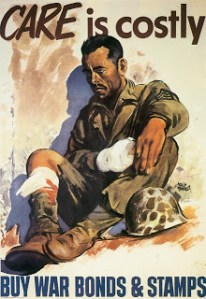
sarsunwoundsolToday I’ll discuss the chain of evacuation, on December 15th, I’ll discuss more details about mobile and fixed hospitals, and on December 17th, I’ll cover evacuation of the wounded.

The Chain of Evacuation

Wartime medical treatment occurred on muddy battlefields under fire, tent hospitals only miles from the front, and sterile stateside hospitals.

A complex chain moved patients to where they could best be treated. At all points along this chain, decisions were made regarding when to treat, when to return to duty, and when to evacuate further to the rear.

Organic Medical Units

These units were attached to combat units and followed them into battle.

Battlefield: Medics performed first aid and moved the wounded to the aid station, often under fire.

Battalion aid station: About one mile from front. Physicians and medics adjusted splints and dressings, administered plasma and morphine. Soldiers reported to the aid station for treatment of minor illnesses or mild combat fatigue.

Collecting station: About two miles from front, near regiment command post. Further adjustment of splints and dressings, administration of plasma, treatment of shock.

Clearing station: About four to ten miles from front. Treated shock and minor wounds. Grouped patients in ambulance loads for transport to field hospitals.

Mobile Hospitals

These hospitals were assigned to a theater of operations, and could be packed and moved quickly.

Field Hospitals: Within thirty miles of clearing station—were supposed to receive the wounded within one hour of injury. Surgery was performed for the most severe cases.

Evacuation Hospitals: Treated illnesses and less urgent surgical cases. Patients could be reconditioned here to return to the front.

Fixed Hospitals

These hospitals were set up a safe distance from the front, either in the theater of operations or stateside.

Station Hospitals: Usually attached to a military base, designed to treat illnesses and injuries among personnel stationed at that base.

General Hospitals: Large facilities where patients received long-term treatment.

Convalescent Hospitals: Designed for rehabilitation.

Resources for Research

Cosmas, Graham A. & Cowdrey, Albert E. The Medical Department: Medical Service in the European Theater of Operations. Washington, D.C.: United States Army Center of Medical History, 1992.

Wiltse, Charles M. The Medical Department: Medical Services in the Mediterranean and Minor Theaters. Washington, DC: Office of the Chief of Military History, Department of the Army, 1965. (available free on line at http://history.amedd.army.mil/books.html)

Condon-Rall, MaryEllen & Cowdrey, Albert E. The Medical Department: Medical Service in the War Against Japan. Washington, D.C.: United States Army Center of Medical History, 1998.

Links, Mae Mills & Coleman, Hubert A. Medical Support of the Army Air Forces in World War II. Washington, D.C.: Office of the Surgeon General, USAF, 1955.

*******************************************************************************************

sarahsundin2
Sarah Sundin is the author of the Wings of Glory series from Revell: A Distant Melody (March 2010), A Memory Between Us (September 2010), and Blue Skies Tomorrow (August 2011). She has a doctorate in pharmacy from UC San Francisco and works on-call as a hospital pharmacist.

***This content is reposted from December 13, 2010.***

Netflix Suspense Movie Clinical: Treatment of the Suicidal Patient

Proper Treatment of a Suicidal Patient. 

clinical-netflixNetflix recently released a psychological suspense (perhaps some would call it horror) movie called Clinical. It surrounds the story of psychiatrist Dr. Jane Mathis who is an expert in dealing with PTSD. She is recovering from her own traumatic experience, a patient attempting suicide in front of her, and has vowed to not care for these types of patients until her own issues are resolved. However, the work of regular psychiatric problems doesn’t seem fulfilling enough so she takes on the case of a facial transplant patient named Alex.

In one particular scene, Alex calls Jane and states he “took too many pills”. I don’t know how this could be viewed other than a suicide attempt. Instead of calling 911, she goes to his home. Once there, Alex is first scene barely conscious, but is evidently able to stand up and answer the door. From that point on, the conversation goes something like this:

Alex: “Did you call an ambulance?”

Jane: “What did you take? If you don’t tell me, I’m going to have to call 911.”

Alex eventually becomes unconscious. Jane then administers a drug via IM injection. In the next scene, Alex is vomiting.

Jane is holding a prescription bottle in her hand. “How many of these pills did you take?”

Alex: “I just wanted to sleep for a while. What did you give me?”

Jane: “It’s called naloxone. I only use it for emergencies.”

Just. Awesome.

Issue One: I can’t imagine how many ethical and legal lines it crosses that this psychiatrist did not have this patient involuntarily committed to the hospital under an M-1 hold when he clearly tried to commit suicide. I’ve seen M-1 holds placed on patients for far less than an actual attempt.  Clearly, this is a big medical no-no and really doesn’t do the patient any favors. Just because the patient’s worried financially about an ambulance ride doesn’t mean he doesn’t get one.

Issue Two: Let’s discuss the medical drug naloxone or Narcan. This is a reversal medicine for drugs that contain opiates. This would include drugs like morphine and heroine. It’s not clear what drug Alex took— all he says is sleeping pills. To me, sleeping pills would more than likely contain some kind of benzodiazepine, of which there is no reversal a doctor would personally carry, though one is available in the hospital setting.

Issue Three: The scene where the patient is vomiting after the Narcan is administered. I’m not sure if the writers are portraying that the drug induces vomiting so that the patient throws up the pills. If so, that’s not medically accurate. Narcan reverses the effects of opiates at the receptor level. It immediately brings the patient out of their high and they’re usually not very happy about that. Most often, we don’t want to fully reverse the drug as this can put a patient at risk for seizures so we may titrate the dose just to reverse the diminished (or lack of) breathing induced by taking too much of the drug.

I actually think it’s okay the doctor did these things if it would have been pointed out by her mentoring/treating psychiatrist that she acted inappropriately and he was going to report her to the Board of Healing Arts because of her actions.

That would have ramped up the tension/conflict on many levels.

Author Beware: This Is Us

Dear This Is Us— please portray nursing accurately. 

Few can argue with the success of the new NBC drama This Is Us. I’m an avid watcher of the show myself. If you like your heartstrings being tugged at every conceivable corner and you’re not watching then you’re missing out on a great opportunity for a good cry. Well, really, several good cries per episode.

nbc-this-is-us-midseason-aboutimage-1920x1080-koThat being said, I was mildly disappointed in a medical scene portrayed in Season 1, Episode 11. If you haven’t seen it, I don’t think I’ll be spoiling much unless you don’t the the fate of Toby post his Christmas collapse. If that statement is true then you should stop reading here.

In episode 11, Toby is getting prepped for heart surgery. He is anxious, but not overly so. It’s a cute and funny scene. There is a flurry of activity as the nursing staff gets ready to take him to pre-op. The conversation goes something like this:

“Name.”

“Toby Damon.”

“Place of birth.”

“Hope Springs.”

At this point, a nurse comes in with a very large needle and makes it noticeable to the patient.

“What is that?” Toby asks. “Holy Cow. Look at the size of that thing! I’m a big guy but geez.”

The nurse then inserts the needle into the IV port and delivers the medication. Another staff member says, “Look this way, we’re getting ready to take you to prep.”

Toby— after the medication takes effect. “What’s in that?”

Nurse replies, “You’re fine. Don’t worry about it.”

Toby asks again. “What was in that needle?”

Nurse responds. “Just medicine.”

Ugh. I mean, really? Let’s take a look at the medical problems with this scene from mild to annoying.

Problem #1: Place of birth is never asked. Although, I do like that they use what is called two patient identifiers— it’s never place of birth. Usually, it’s your birthday. Also, if he’s going to surgery, there should be some communication with the patient about his understanding of the procedure he’s going to have. “Sir, my name’s Jordyn. I’m one of the OR nurses here to take you to the pre-op area. What procedure are you going to have done today?”

Problem #2: It’s called Pre-op. Not prep.

Problem #3: This is getting more egregious. We don’t insert needles into IVs anymore. They are all needleless system. I get that it looks more dramatic to come in wielding a big needle, but it isn’t medically accurate. I haven’t seen an IV system you had to access with a needle in over fifteen years. In fact, in most tubing systems you can’t even insert a needle anymore.

Problem #4: If you are using a needle and the patient is anxious— don’t show them the needle. Obviously, this is one way to increase the patient’s anxiety which is not the direction we want them to go.

Problem #5: The patient asks the nurse twice what he’s being injected with and she doesn’t disclose it. Honestly, this goes against the very fiber of the nursing code. Nursing is about telling your patient the truth and educating them about what’s happening to them medically. Now, in an anxious patient, the explanation doesn’t need to be long. She could have simply stated, “Sir, it’s very common to be anxious before surgery. This medication is called Versed and will help you relax a little bit.”

Just so the staff writers of This Is Us are aware, I am available for medical consultation. Don’t make me hate a show I love by portraying medical people like they don’t care about a patient’s very direct questions. Little is seen in this scene of the medical staff using other methods to calm and relax this patient other than shoving a medicine in his IV and not even educating him about what it is.

That’s not how we take care of patients.

Author Beware: Ransom’s (TV Show) Cancer Problems

Author Beware: Ransom’s (TV Show) Cancer Problems 

There’s a new show airing called Ransom on CBS that centers around a high priced, privately paid negotiation firm. However, they might want to shell out some dollars and hire a medical consultant.

ransomIn the second episode, the show centers around a young man who has just received a lucrative major league baseball contract when he’s diagnosed with cancer, specifically AML, which is a form of leukemia. People kidnap his bone marrow donor and hold her for ransom.

What follows is a major spoiler alert for this episode so read no further is you haven’t seen the show.

The main medical problem centers around this patient’s choice for treatment. In the episode, he decides he doesn’t want chemotherapy and wants to go directly to a bone marrow transplant because “chemo will ruin my lungs and I won’t be able to play baseball.” Of course, the donor is found in time, the baseball player has “surgery”, and quickly recovers in a few days.

Issue One: A patient cannot go directly to bone marrow transplant. Conventional therapy must always be tried first. Bone marrow transplant is never first line therapy for this type of cancer.

Issue Two: A patient will get chemo and/or radiation to wipe out their own immune system in order to receive the bone marrow transplant. A patient cannot have any of their own immune system when they receive their “graft”. It also takes days to accomplish this and the patient is in strict isolation during this process because they have on immune system to fight off disease.

Issue Three: A patient receiving a bone marrow transplant does not go to surgery. The donor does get the cells, but it is simply via a transfusion (as in the same fashion as receiving a blood transfusion). They don’t even leave their hospital room. The person who actually goes to surgery is the donor to harvest their bone marrow.

Issue Four: Can anyone say isolation? Both before and after a bone marrow transplant, the patient is in strict isolation. This means ALL visitors must be gowned, masked, and gloved. The mother cannot be having a conversation with her son without any of these in place.

Showing the patient sicker would have made for a more intense episode. Even better would have been if his own immune system had been wiped out and the actual cells were taken for ransom— that would have truly been a life or death scenario.

I’ve never seen a situation where portraying the real medical scenario makes stories more boring. Writers everywhere— real life is always better than made up implausibilities.

Physical Restraint of a Mentally Ill Person

Physical Restraint of a Mentally Ill Person

Isn’t a medical scene more dramatic when you get to restrain someone? However, to ensure your scene is medically accurate, an understanding of the law and the limitations on using restraints is important. Of course, evil characters can do away with the law. That’s your latitude as a writer. Just remember the reader needs to know that you know this medical person is doing something improper.

I’m pleased to host Patti Shene as she shares her expertise from working as a psychiatric nurse. You can learn more about Patti by visiting her website.

Welcome, Patti!

man-921004_1920For a long time, restraint was used as a means to control the unpredictable and sometimes violent behavior of mentally ill patients. However, over time, the courts have recognized that these persons have an inherent right to freedom from inappropriate use of physical or chemical restraint.
The Supreme Court acknowledged, in the 1982 case of Youngberg vs Romeo, that the use of restraint severely inhibits personal liberty. They concluded the use of restraint should reflect “the exercise of professional judgment.” However, this statement encompassed a broad range of views that resulted in a nebulous interpretation.

Over the past decade, it has become clear that restraint and seclusion can legally be used only as a method of last resort when the patient is an imminent danger to himself or others.

Suppose you have a character who meets this criteria for “imminent danger to himself or others”. First, this information pertains to leather restraints.

Physical restraint consists of four leather cuffs placed around the wrists and ankles of the patient. The cuff has adjustable sizes and is fastened with a leather belt that passes through a metal loop on the cuff. The belt is then secured to the frame of the bed and locked in place. The belt can only be released, or opened, with a key.

The use of restraint should be considered a psychiatric emergency, and not used for convenience of staff or as a form of “punishment” for inappropriate or unacceptable behavior. There are many safety issues to consider when a patient is placed into physical restraints.

A nurse must always be present to assess the need for restraints. A patient can be physically contained by staff members prior to the arrival of the nurse, but only if there is an imminent danger to the patient or others.

Physical restraint without the use of an external device should adhere to strict guidelines. Cornell is one such method, a procedure that incorporates three staff members and greatly reduces the risk of injury.

The patient should always be physically contained face up to prevent asphyxiation or choking.

No cloth, clothing, or other restrictive material should ever be placed over the face during a restraint procedure.

Once the patient is placed into physical restraint, is imperative that circulation be maintained. If the caregiver’s finger does not fit comfortably between the cuff and the patient’s skin, the cuff is too tight.

A caregiver must check the patient at a maximum of fifteen (15) minute intervals.

The emotional needs of the patient must be met at all times.

Hydration and toileting needs must be met every two (2) hours.

A patient should never be left alone in a room with a door open after restraints have been applied. This would expose the patient to possible assault or injury by another patient.

The nurse must notify the physician and obtain a telephone order for restraint not later than one hour after the restraint has been initiated.

The dignity and privacy of the patient must be maintained at all times during the restraint procedure. Never is the patient to be teased, taunted, screamed at, intimidated, or in any way physically or verbally abused during the application or confinement of restraints.

If a personal issue exists between the patient and a particular staff member that could result in the violation of these basic rights, that staff member should immediately be removed from the situation.

In the case of child restraint in a residential child care facility, the parent/guardian must be notified as soon as possible that the intervention has taken place and the behaviors that led up to it.

Reevaluation of the patient in restraints, according to the Joint Commission on Accreditation of Healthcare Organizations (JCAHO) is 4 hours for adults ages 18 and older, 2 hours for children ages 9-17, and 1 hour for children under age 9.

The patient must be released from restraint as soon as he/she is calm, cooperative, and able to maintain control. He/she must be able to commit to display safe behavior toward himself and others.

Several incidents across the country in recent years resulting in serous physical or psychological injury or even death have brought national attention to the issue of physical restraint. Do your mentally ill character justice by knowing the legality of how they should be treated when restraint is warranted.

Source material found at here and here.

***This is a repost from 12/3/2010***

*******************************************************************************

patti-shenePatti is a 1969 graduate of a state nursing school in Long Island, New York. Her exposure to state hospital surroundings led her to choose a career in psychiatric nursing. She is a Veterans Administration Hospital retiree and also worked at Colorado Boys Ranch, a psychiatric residential treatment center for several years. Retirement allows her to pursue her interest in writing. She currently fills the position of Executive Editor for Starsongs Magazine, a publication of Written World Communications for kids by kids.

Can You Commit Suicide With an AED?

Recently, my husband and I have been binge watching through all five seasons of breaking-bad-s5-400x600-compressedv1Breaking Bad. In the last season, a gentleman decided to kill himself using an AED.
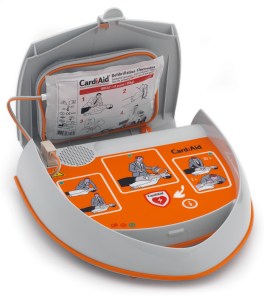
AED stands for Automatic External Defibrillator. It is a quick rescue device used mostly by non-medical people for cardiac arrest. It is designed to recognize lethal heart arrhythmias and deliver a shock (electricity) if the patient is in one. The AED will not always fire. In fact, there are really only two arrhythmias it is designed to treat.

The question becomes, can you use an AED to commit suicide? An AED has two large, white patches connected to the device. In the show, the gentleman places one patch on his chest, pulls off the other patch and places the exposed wires in his mouth. After this, he turns on the device and discharges it, thereby killing himself.

aedThis scenario is highly improbable and here’s why:

1. Both patches must be in place for the defibrillator to analyze the patient’s rhythm. If they’re not, the machine will not progress any further.

2. Let’s say the AED would read the rhythm (one patch on the chest and exposed wire in the mouth)— it won’t deliver electricity for a normal rhythm (which this gentleman likely has because he’s alert and conscious.)

3. Let’s say the AED did fire for his normal heart rhythm— would he die? There is a slight chance that he might die, but only if the AED fired during a very sensitive time in the electrical cycle of his heart which has a very low probability.

All in all, I don’t find this method of suicide possible. Sorry, Breaking Bad, though I did love the series.

Finding Photos of Hospital Interiors

Recently, I was contacted by an author who wanted me to research how to find a particular hospital’s interior— particularly the ER. The institution happened to be Cedars-Sinai Hospital in California.

architecture-931283_1920This is not as hard as you might think. The more popular, or should I say well known, the hospital is the more likely you’ll be able to find photos. Hospitals like to show off, particularly if they’ve done any sort of recent remodel. Typically, on hospital websites, you’ll find a few shots of the interior of some of the more high cost, technologically dependent areas like the ER, the ICU, and radiology suites.

In this instance, I was actually able to find several shots of the interior on an architectural firm’s website who had remodeled the hospital’s ER in 1997. The only piece of information that would need to be ferreted out passed that point is whether or not the hospital has remodeled since then which I would personally find unlikely.

Most often, for this type of information just Google search very specifically. For instance, I searched “photos of Cedars-Sinai Hospital ER” and one of the first links was to the architectural firm.

If you are using an existing hospital in your novel then it is probably a wise move to try and find actual photos as a reference for your descriptive passages. Trust me, someone who works in that ER will read your novel and know the difference.

Author Beware: Don’t Make Medical People Look Like Uncaring Idiots 3/3

Today is the last post on my displeasure with a particular, bestselling novel. Click on the links to find Part 1 and Part 2.

In short, a fourteen-year-old girl has come to Planned Parenthood for the Morning-after Pill.

What follows in italics is an excerpt from the book where the nurse giving the patient her discharge instructions. I’m keeping the identity of the author and the name of the book anonymous.

 girl-1149933_1920Several more minutes ticked by before the nurse, her peppiness especially noticeable in the wake of her cool, serene, superior returned.  A brown paper lunch bag full of brightly colored condoms bunched underneath her arm, a prescription bottle in one hand, and a glass of water in the other.

“Take six right now.” She shook six pills into my clammy palm and watched me chase them down with water. “And six twelve hours from now.” She looked at her watch. “So set your alarm  for four am.” She shook the paper bag at me teasingly. “And being careful can be fun. Some of these even glow in the dark! ”

Wow! Just yikes. Trust me, nurses are usually not so peppy. How does the patient know the “brown paper bag” is full of “brightly colored condoms”? Can she see through brown paper? I digress.

Problem: What’s really wrong with this passage is the patient instructions. The author makes it clear in the novel that the patient is taking the Morning-after pill. There are two such pills. One by the same name and the other is Ella. Neither pill has such a dosing regime. Both are one pill only. That’s it.

I honestly don’t get the point of writing something so ridiculous that is so easily researched.

More seriously, this nurse’s teaching is cringe worthy. I don’t know a nurse on the earth who would talk about condoms glowing in the dark. How about having a serious talk about contraception? How about having a serious talk with a fourteen-year-old girl who is having sex and how she feels about that?

So much more should have been done for this girl in this book by these medical professionals that it was truly disheartening to read. Why? Because this is not the impression I want any woman of any age to expect when they interact with a medical professional about something as important as this.

Writers and authors everywhere— please, do better. Your words educate those we interact with as patients and this is not the impression we want them to have. I’m only asking for one, redeemable, medical person. Make all the rest awful— you have my permission.

Author Beware: Don’t Make Medical People Look Like Uncaring Idiots 2/3

Today, I’m continuing my discussion of an uber popular book that didn’t paint medical people in a good light— like at all.

You can find the first post here. I’m not mentioning the author or the novel here to protect the author from angry medical people everywhere (okay, perhaps it’s just me.)

What follows is the same encounter, different section. As a quick reminder, this fourteen-year-old girl believes she’s been raped and is looking for guidance from a female physician.

What follows in italics is an exert from the book.

doctor-563428_1920-1There had been a question burning in my throat for the last ten minutes, but it was her reaching for the handle of the door that forced me to say it. “Is it rape if you can’t remember what happened?”

 The doctor opened her mouth as if she were about to gasp ‘oh no’. Instead, she said so quietly I almost didn’t hear it, “I’m not qualified to answer that question.” She slipped out of the room soundlessly.

 Problem: There are so many problems with this response from this doctor to her patient that I am flabbergasted as to even know where to start. First, how about starting with a doctor who cares enough to simply ask a few follow-up questions?

Such as, “Please, tell me what happened.”

What is shocking is just the amount of information that has been disseminated to the population about getting mutual consent before a sexual encounter. In fact, in just the last couple of years was the infamous “Tea Consent” video which you can view below.

In fact, the video states, “And if they’re unconscious, then don’t make them tea. Unconscious people don’t want tea and can’t answer the question, ‘Do you want tea?’ because they’re unconscious.” So it seems the issue of whether or not this was consensual would be fairly easy to determine.

No consent, then a crime has occurred.

The first signal to this physician is her patient’s memory problems. This is very concerning for her getting slipped a drug so that she could be raped. If the physician feels this is something she can’t explore, especially considering the patient’s age, then she should seek outside guidance. This could rise to the level of needing to be reported to the police.

Never just stop and not say anything more. This young girl is clearly in crisis. A doctor is qualified to help this patient, particularly one in this setting, who should be clearly educated in circumstances just like this.

Who else can this girl turn to for answers if not a trusted physician?

Author Beware: Don’t Make Medical People Look Like Uncaring Idiots 1/3

I’m starting out my medical posts of the New Year truly fired up . . . and not in a good way. This title sounds harsh, doesn’t it? Sadly, it’s exactly how I feel.

If you’ve known me for any length of time, then you know I’m passionate (just slightly) about medical accuracy in novels. This is why this blog exists and a major reason was to clear up misconceptions about medical people and how they perform in their job.

teen-girl-2Let me first state, clearly, that you can have a bad medical person in a novel. They can even be doing bad things. Criminal things. That’s what drives fiction. Tension. Conflict. However, also should the author help the reader realize, in some fashion, that the author knows this fictional medical character is doing these things inappropriately and it is not a normal medical experience. To help with this, I encourage all authors everywhere to write a medical person performing ethically as a balance in the scene or book. This is beneficial so you don’t anger every medical person out there to want to hold gas and flame to your hard earned written prose.

Professionals like to be portrayed accurately in their profession. Anyone remember how Joy Behar angered thousands of nurses? Yes, this is what writers should avoid.

What follows is an exert from a highly popular mainstream novel. This novel hit both the New York Times AND USA Today Bestseller lists. I’m not naming the book or author here and if you know what either of these are, please do not leave it in the comments section. I’m only using the quotes as a teaching points.

For background, a fourteen-year-old female (from what I can tell from the book) believes she has been raped. She’s going to Planned Parenthood for the Morning-After Pill. The rape occurred on a Friday around midnight. The character is presenting for treatment Monday after school. What follows in italics is an exert from the book.

While she examined me, she explained what the Morning-after pill was. “Not an abortion,” she reminded me twice. “If the sperm has already implanted the egg, it won’t do anything.”

Problem: Medical professionals are careful to separate opinion from medical fact. A patient might view what an abortion is differently than their medical provider and ultimately a medical provider’s job is to disseminate medical information and not their personal opinion. If it is their personal opinion, it should clearly be identified as such.

Some people view abortion as terminating a pregnancy at any stage— including just after fertilization. You will find web sites that claim the Morning-after Pill is not an abortion pill. However, you also can find two, well respected medical sites (Web MD and The Mayo Clinic) that state one of the actions of the Morning-after Pill is “keeping a fertilized egg from implanting.”

Solution:  It would have been better for the medical provider in this passage to simply state the following. “The Morning-after pill works by delaying or preventing ovulation, blocking fertilization, or keeping a fertilized egg from implanting in the uterus. However, there is evidence out there that suggests that it also doesn’t keep a fertilized egg from implanting in the uterus. My personal opinion is that this is not an abortion pill.”

Given this information, a patient can then decide for themselves if this is ethically something they want to choose to do without the personal bias of the medical provider influencing their decision.

A patient should always be given opportunity to choose medically what works within their ethical framework. If the medical provider cannot support them in doing that (what is a reasonable decision) then they should refer them to a provider that can.

Next post, we’ll continue our discussion on the medical issues in this novel.

In full disclosure, I am pro-life.

What are your thoughts on this passage in how the medical provider relays the information to this fourteen-year-old girl?