The Face Behind the Mask: Part 2/5

We’re continuing our five part series with certified nurse anesthetist Kimberly Zweygardt.

Welcome back, Kim.

Last post we discussed who is in the OR. Today let’s talk about the OR setting then discuss the anesthetic.

The OR is a cold, sterile, hard surface, brightly lit environment that is all about the task instead of comfort. Cabinets hold supplies, the operating room bed is called a table, Mayo stands hold instruments for immediate use during the operation and stainless steel wheeled tables hold extra instruments and supplies. IV poles,  wheeled chairs/stools and the anesthesia machine and anesthesia cart complete the setting.

When a patient comes in, the staff does a “time out.” The circulating nurse, the surgeon and anesthetist all say aloud that it is the correct patient and procedure. It sounds like this, “This is Mrs. Harriet Smith and she’s having cataract surgery on her left eye.”  Once done, the staff swings into action, the circulator “prepping” the surgical site (washing it off with a solution to kill the germs) while the scrub nurse prepares the instruments after “gowning and gloving” (putting on sterile gown and gloves). Meanwhile, the surgeon “scrubs” meaning washing his hands at the sink outside the room. When he is done, he’ll enter the room to get gowned and gloved. Before all this is happens, I’ve started my care of the patient.

I meet the patient before this to fill out a health history specific to anesthesia. Are they NPO (Have they had anything to eat or drink after midnight)? Do they have allergies? Have they ever had an anesthetic and if so, any complications? Has anyone in their family ever had complications with anesthesia? Then I ask about medications and other health problems  so I can choose the best anesthetic. But an even bigger job is reassuring them that I am there to take care of them.

When they come to the OR, I attach monitors—EKG heart monitor, blood pressure cuff, and pulse oximetry (a small monitor that fits on the finger to measure the oxygen levels in the blood). Once the monitors are on, I give medicines for the  “induction” of anesthesia. As the patient goes to sleep, they are breathing oxygen through a face mask. Drugs include the induction agent (most likely Propofol), narcotics (Fentanyl most common), an amnestic (Versed which provides amnesia), plus a muscle relaxant (Anectine)that paralyzes the musclesWhen asleep, the breathing tube is placed using a laryngoscope that allows me to visualize the vocal chords. Then the anesthetic gas is turned on.

I am with the patient through the whole operation, watching monitors, giving medications and making adjustments.  At the end, I reverse the muscle relaxants, turn off the anesthetic gas, and begin the “emergence” process waking the patient up.

Now, that’s the norm but we’re writers where normal is boring! Next post I’ll let you in on all the things that can go wrong!

***Content originally posted January 21, 2011.***

*********************************************************************************
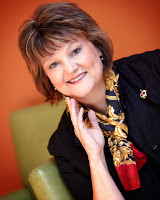
Kimberly Zweygardt is a Christ follower, wife, mother, writer, blogger, dramatist, worship leader, Certified Registered Nurse Anesthetist, a fused glass artist and a taker of naps. Her writings have been featured in Rural Roads Magazine, The Rocking Chair Reader, and Chicken Soup for the Soul Healthy Living Series on Heart Disease. She is the author of Stories From the Well and Ashes to Beauty, The Real Cinderella Story and was featured in Stories of Remarkable Women of Faith. She lives in Northwest Kansas with her husband where their nest is empty but their lives are full. For more information: www.kimzweygardt.com

The Face Behind the Mask: Part 1/5

I’m happy to host my good friend, author, and dramatist Kimberly Zweygardt over the next five posts and she shares about being a CRNA— Certified Registered Nurse Anesthetist. You can find out more about Kim by visiting her website here.

Welcome, Kim!

If you have a profession besides writing, doesn’t it bug you when someone doesn’t get it right? It may be something small, but you wonder, “Why didn’t they do some research?”  With the Internet, it is easier than ever to find information, but if it is a hidden profession like my own, there might not be much info for you to glean. Today I want to share with you, The Face Behind the Mask or The Life and Times of a Certified Registered Nurse Anesthetist (CRNA). The operating room is my world, so let’s begin there.

A CRNA is an advanced practice nurse that specializes in anesthesia. CRNA’s were the first anesthesia specialists beginning in the late 1800’s. Anesthesiologists are MDs that specialize in anesthesia (it became a medical specialty after WWII), unless of course you are in great Britain where everyone is an Anaesthetist (Ah-neest’-the-tist’). Confusing, yes? Just remember, the work is the same, but the title is different. For some reason, the term  Anesthesiologist is more widely known (because it is easier to pronounce?), but since CRNAs give over 60% of the anesthesia in the US, if you write a surgery scene, you might want to consider using a CRNA as the caregiver, especially if it is a rural setting. Over 90% of the anesthesia in rural America is provided by a CRNA.

The OR is its own world. Someone has to do the operation, so there are general surgeons, trauma surgeons, orthopedic surgeons (bone), neurosurgeons (brain and nerves), cardiovascular surgeons (heart and major vessels), as well as OB/Gyn (women’s health), ENT (ear, nose and throat) and ophthalmologists (eye surgeon). If it is a large teaching hospital, there might be a medical student or surgery resident assisting the surgeon.

A scrub nurse or surgical technician is there who hands the instruments to the doctor as well as a circulating nurse—a RN who records what happens during the operation as well as obtains any supplies needed in the room. For example, if the doctor needs more suture, the circulating nurse would open it so it remains sterile and hand it to the scrub nurse who is also sterile.

Two of man’s greatest fears are being out of control and the fear of the unknown. The OR setting speaks to both. What great plot scenarios and drama we can create by going through the double doors that lead to surgery!  Next time we’ll talk about interesting scenarios and complications concerning surgery and anesthesia. Happy plotting!

***Content originally posted January 14, 2011.***

*********************************************************************************
Kimberly Zweygardt is a Christ follower, wife, mother, writer, blogger, dramatist, worship leader, Certified Registered Nurse Anesthetist, a fused glass artist and a taker of naps. Her writings have been featured in Rural Roads Magazine, The Rocking Chair Reader, and Chicken Soup for the Soul Healthy Living Series on Heart Disease. She is the author of Stories From the Well and Ashes to Beauty, The Real Cinderella Story and was featured in Stories of Remarkable Women of Faith. She lives in Northwest Kansas with her husband where their nest is empty but their lives are full. For more information: www.kimzweygardt.com

Author Beware: Taking out Perfectly Good IVs

If you’re a frequent reader of this blog then you know I have kind of a love/hate relationship with James Patterson. Love his books (most of them), but I frequently take him to task for medial inaccuracies. I rarely call out an author in person or name their book because I like to mostly teach on medical topics, but I think James could use a medical consultant and I also think he has enough money to afford one– though I think these posts are not increasing my chances of working for him.

Anyway . . .

In one of his recent titles, Woman of God, the first part of the book highlights the main character serving as a physician in a war torn region.

Early in the novel, a young boy comes to their primitive hospital suffering from a bullet wound to the chest. During the surgery, which involved opening up the side of his chest, it is noted that the patient stops breathing and so the surgeon, a mentor of the main character, just gives up.

First of all, a patient receiving major surgery like this should be intubated and anesthetized. They do offer surgery, so must provide this to most of their patients. Earlier in the chapter, it is noted that the patient is being bagged and anesthetized patients can’t breathe on their own anyway— so why is a decision made to let him die when he stops breathing when, if properly cared for, he shouldn’t be breathing anyway?

However, this situation does not deter the main character and she continues his operation.

“The heart wasn’t beating, but I wasn’t letting that stop me. I sutured the tear in the lung, opened the pericardium, and began direct cardiac massage. And then, I felt it— the flutter of Nuru’s heart as it started to catch. Oh, God, thank you.

But what can a pump do when there’s no fuel in the tank? 

I had an idea, a desperate one. 

The IV drip was still in Nuru’s arm. I took the needle and inserted it directly into his ventricle. Blood was now filling his empty heart, priming the pump.”

Where to start, where to start.

First, it’s never noted that this patient is receiving blood. I think this is an add on by the author for effect. Secondly, remember IVs are not needles, but very small plastic catheters, that would not be able to puncture through the tough muscle of the heart.

Thirdly, and by far the most egregious, the physician takes out a perfectly good IV for a nonsensical reason! It is hard, really hard, to get IVs into sick kids— particularly those suffering from hemorrhagic shock like this boy is from a gunshot wound to the chest. That one, lonely IV you took out to puncture his heart (not a good idea either), you’re going to need back because this kid will still be sick. You’ll close his chest and then have to find more IV access. Giving fluids via a vein can rapidly fill the heart and it is insanity to take out a good IV to do what the text suggests.

Call me, James. Really. I’m not as expensive as you might think.

Medical Review of The Shack

There’s nothing like a Christian movie to create a firestorm of controversy. I am a Christian and saw the film and I thought the biggest failure of the film was actually medical in nature.

That’s right . . . medical.

There have been plenty of articles written on The Shack’s theology, but I doubt anyone has touched on the medical inaccuracies which I’ll do here. If you haven’t seen the movie and don’t want any spoiler alerts then stop reading . . . like right now.

The story revolves around a man named Mack who early in the film narrowly misses a major collision with a semi. At the end of the movie, it’s revealed that he’s been in a coma (he’s been unresponsive) for approximately 2-3 days. Our first glimpses of Mack post accident are in a regular patient room. He has an IV, IV fluids and is on a monitor.

Problem One: If you’re broadsided by a semi, you should actually look injured. Mack is relatively uninjured as a result of this accident. He has but a few scrapes (not even stitches) on his face and none of his bones are broken.

Problem Two: The IV pump is not running. If you watch the film, the IV pump is off. If it were on, you’d see numbers lit up on the screen.

Problem Three: If a patient is unresponsive, you have to provide a way for things to come out. Think about it, do you ever go three days without peeing? Neither does a comatose patient. Plus, we need to ensure kidneys are functioning properly which means we need to monitor urine output. This is the type of patient where the phrase “a tube in every orifice” means exactly what it means. Also, there is a significant amount of literature that patients should be nourished with tube feedings much earlier. In real life, Mack would likely be in the ICU, perhaps even on a ventilator, until he woke up. His only medical support would not just be IV fluids.

Next time Shack, call me.

Author Question: Family Notification of Death

Themelina Asks:

I have read some of your posts and I am wondering if I could please have some help regarding a book I am writing. I have three scenes in my book that are in a hospital. The background story is that a girl gets notified that her mom and sister have been in a car crash. Her mom has died and her sister is currently in surgery. Is it right that a police officer comes to her house and lets her know or does something else happen?

After she finds out she faints, and hits her head. I don’t want to make this part sound too serious. However, I still want her to go to the hospital. So what floor would she go to? How long would she stay?

Lastly, the third scene is where the sisters see each other after surgery for the first time. She is paralyzed. How could she communicate with her?

Jordyn Says:

Thanks, Themelina, for sending me your questions.

Question #1: Who would notify the family of the death? I could see this happening a couple of ways. If the mother was declared dead at the scene of the car accident then the police would notify the family. If the mother is transported to the hospital and the hospital team declares her dead then it probably falls on the hospital team to notify the family.

We don’t generally like to give death notifications over the phone. I’m not saying it’s not ever done, but not preferred. We would likely call the family and ask them to proceed quickly, but safely, to the hospital. This might also be preferred because the sister is requiring surgery and except in the most extreme cases surgeons generally like consent before they operate. If there is not a parent to give consent (you don’t mention a father in your scenario) it could fall to the sister, if she is eighteen or over, to give consent for her sister’s surgery.

Question #2: People who pass out and hit their heads are rarely admitted to the hospital. I’m assuming you want this sister to suffer some form of concussion. She gets the awful news about her family, passes out, hitting her head in the process. If she wakes up rather quickly (a few minutes or less), is oriented to person, time and place, and doesn’t show neurological signs of a brain injury that might require surgery then she would get a physician evaluation, a few hours of monitoring to be sure her symptoms are improving, and then she would be discharged home. There would also be no need to wake her up through the night. This is a myth.

Question #3: You don’t specify in your question the level of the sister’s paralysis. Her ability to talk will depend on the level of paralysis. Patients paralyzed from the neck down are, at least for a while, on a ventilator. When a person has a trach, there are special adapters for the trach that allows people to talk. However, a trach is not placed at the beginning and it takes time for a person to learn to talk with the special valve. If she is on a breathing machine and can’t write (because her arms are paralyzed), but is awake and can understand questions then we use a system of eye blinking for responses. One blink for “yes”. Two blinks for “no”. And obviously more simply phrased questions.

Hope this helps and good luck with your story!

Still Life Winner

My apologies everyone, but I just realized I never posted a winner for Gillian Marchenko’s book Still Life.

Congratulations to Robin M.! I’ll notify you directly.

Thanks again Gillian for sharing your insights on helping friends with depression.

Author Question: Police Officer DNA

Victoria Asks:

I am writing a book and hoping you could help me with a question I have. Would a cop’s DNA come up in the system if it is collected from a rape victim ?

Jordyn Says:

This is a very intriguing question you ask and I actually had to go to my brother (thanks, Karl!) who works in law enforcement as a detective for the answer.

What follows is his take.

When cops are hired their fingerprints are taken. If their DNA was needed to differentiate their DNA from another person’s at a crime scene they would do so, but it’s not a routine thing.

Lots of cops are former military and I would say in the last twenty years if you served then your DNA would be on file somewhere. I don’t think it would be part of CODIS (the Combined DNA Index System) though because that’s only a criminal database.

If a cop was suspected, I’m not sure there would be a backdoor way to get his DNA profile from one of those sources I mentioned (military or CODIS). Officers working the case could easily swab something like his patrol car, computer keyboard, or something else owned by the department because there’s no expectation of privacy there.

In the last ten years or so a lot of jurisdictions are collecting DNA from any person arrested on a felony. The court orders it. I’m sure there have been challenges and as far as I know it has been held up.

Also, anytime there’s a new submission to CODIS, the profile is automatically checked against unsolved crimes. When police take DNA from a crime scene with no suspect, they submit the profile to CODIS and it goes on record. Later, if someone is arrested for a felony and their DNA is submitted to CODIS, now matching a name to the profile, it could clear the older case.

Men Who Kill Women

Regular followers of my blog know that my medical nerdiness can reach into other areas of science like forensics and psychology. I was actually doing a search on women who kill men when I came across this very interesting article on the opposite— men who kill women. Information in this post comes directly from the Vice article entitled Inside the Minds of Men Who Kill Women posted August 10, 2015.

Married couple and criminologists from the University of Manchester, Rebecca and Russell Dobash, spent a decade interviewing men serving life sentences in seven different British prisons. According to the article, this was the largest study done to the date of the posting. They have also published a book on the subject (photo right).
There were some consistent similarities that pertained to these men. “They found that many women are murdered by jealous, possessive, and controlling men.”

Here are some of the highlights.

1. In the majority of cases, men kill out of sexual jealousy. They are possessive. And this possessiveness can also lead these men to kill others close to their victim like her children, family, and friends.

2. Many had problematic childhoods and adulthoods that consisted of alcohol use and unemployment. The authors suggest that the use of alcohol is common to Britain and doesn’t necessarily mean illicit drug use as perhaps is the case in the US. Though they don’t specify this difference.

3. Many are sexual predators.

4. Older women, over the age of sixty-five, are considered vulnerable and therefore worthy targets. Living alone does add risk.

5. The murderers were largely not remorseful of their crimes.

6. Surveillance programs that force violent men (before they murder) to understand denial, remorse, and empathy could prove helpful. Also suggested are developing youth programs to teach people how to handle breakups.

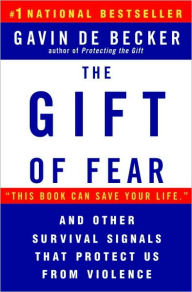
I also highly recommend all women read The Gift of Fear by Gavin de Becker. I think it should be required reading of all girls over the age of fourteen. The sooner they can learn these skills the better.

Escaping Hunted

Hunted was a new reality show that aired earlier this year on CBS. Nine pairs of people “go on the run”. If they survived twenty-eight days they won $250,000 per team. This show was really interesting as an author to watch because it highlighted what kinds of tactics law enforcement uses to capture evaders of justice. Some things I didn’t even know existed.

Here are things NOT to have your characters do if they are on the run from law enforcement.

1. Don’t contact anyone you know. The couples that lasted the longest really stayed away from their network of friends and family.

2. Internet use will be your downfall. The hunters, as they are called, comb through all your social media and even use it against you. In one instance, they saw one contestant loved a particular basketball team because he had photos of being at their games and wearing their jerseys. The team’s name ended up being a password to one of his online accounts. They also would post “wanted” posters on contestant’s Facebook page asking for help in locating “fugitives”.  Also, deleting your social media accounts doesn’t really work. “Nothing is ever erased on social media.”

3. They will access everything to try and find you. They can access real time banking information. Vehicle registration. Closed circuit TV cameras. They’ll look at your old high school yearbooks. There are systems in place on major highways that automatically capture and scan license plates and they can put an alert out for it.

4. Burner phones. Burner phones may not necessarily be the answer. Although the phone may not pop up with a name, they can see the phone number that you’re calling from on the receiving person’s phone bill. A new, unknown number calling? They’re going to guess that it’s you. Once they pin down the phone number, calls between you and people you assume are safe can actually be listened to.

5. Telematics. In all cars built after 2010, GPS satellites can be used to track your car.

6. Mail Cover. Did you know the post office takes photos of every letter sent through their system? Yea, me either. A warrant can be issued for a particular address to try and find you. Here’s an interesting news story specifically about mail cover.

7. Don’t do something you would normally do. If you’re a parent, don’t call your children. If you’re an outdoor expert, maybe don’t go camping. Many duos were successful if they stayed off grid, but many also grew tired of being on the run after a few weeks and would contact friends and/or family for respite. That’s when they were usually caught.

Hunted was a fascinating show of real life cat and mouse. If you’re an author, it’s definitely worth the time in research to take in the episodes.

Only two of the nine couples made it twenty-eight days. Do you think you could last that long?

Why Do Some Nurses Prefer Night Shift?

I was reading a newly released medical thriller when I came across this passage:

“Nurses on night shift were often young (lack of seniority meant they had no choice but to work unpopular hours) and surly (i.e., pissed off about it.)”

Yes, that’s a quote. Perhaps I’m being oversensitive (okay, of course I am), but this is my profession and I don’t like me or my colleagues to be painted in such broad strokes so I thought I would give some reasons why some nurses actually prefer to work nights and are even very happy about it. These are not numbered according to importance.

1. Night Shift Differential. Nurses are generally paid a nice differential for working nights. This varies widely depending on the institution but can be a nice bump in pay. This may translate into working less and being able to spend more time with family or getting more bang for your buck for working the same hours.

2. We’re just night people. I know day shift people don’t understand that it is easier for some people to stay up all night. Our clocks are a little bit different than most other people. That’s a good thing, right? You don’t want your night nurses falling asleep and it’s a good thing some nurses like working nights because hospitals run 365/24/7. Personally, I think a crime has occurred if I have to be up before the sunrise. It feels wrong on a cellular level.

3. Child Care Reasons. Some families like to juggle one (or even both) parents working nights to limit or stave off daycare costs.

4. Less Administration on Site. This might be the night shift untold secret, but there are infinitely less administrators around during the night shift which means less overall scrutiny. I don’t mean to say night nurses are crazy with power and do inappropriate things, but there is a more relaxed feeling on nights because of this. Government entities don’t pop in at 0300 for a surprise inspection— though they might now that I’ve written this.

5. More Relaxed Pace. Many nurses prefer nights because of the more relaxed pace. Fewer tests and procedures to take your patient to. In the ER setting, less overall patients as the night goes on (though you also have less nurses to take care of those patients.) For inpatient and ICU nurses, doctors round during the day which is when the most orders are generated. Not having as many tasks leaves more time to truly connect with your patient. When we have only one or two ER patients at 4AM— we can spend a lot of time teaching and/or visiting with families.

6. They are smart, scrappy people. Not to say this isn’t true of day shift nurses, but night shift nurses usually have less resources available to them overnight. There are fewer people— fewer bodies to help in a code. Support services like lab, pharmacy, central supply, etc may not staff people 24/7 so if a patient needs something, night shift nurses have to think outside the box.

Overall, what raised my ire about these two small sentences from this author (a male physician) was the “surly” connotation. Even if a nurse doesn’t like to work nights, they do not take it out on their patients because of it. Are there cranky, surly nurses? Sure.

However, you can find them on both days and nights.

Love your night shift nurses. They are there for you when everyone else sleeps. And many are highly professional, excellent nurses with years of experience.