9-1-1 S1/E3: Evaluation and Treatment of Overdoses

In Episode 3 of 9-1-1, the story opens with officer Athena Grant, played by Angela Bassett, finding her daughter unconscious from taking hydrocodone pills as seen in the trailer below. The daughter, who appears to be between twelve and fourteen, is whisked off to the hospital and admitted to the ICU in short order. One, did they treat this ingestion (or overdose) correctly? Two, would this type of ingestion warrant ICU admission?

It’s stated in the episode that the daughter took “six to seven” hydrocodone pills. Hydrocodone is a combination of acetaminophen (Tylenol) and a synthetic type of codeine. It comes in many different preparations with different amounts of acetaminophen and hydrocodone. Where do we start to evaluate whether or not the ingestion is worrisome?

1.  How is the patient? What signs and symptoms do they have?  The EMS crew in this situation is lucky. The mother knows exactly what the daughter took. She presents unresponsive with slow breathing. Number one treatment in this situation after assisting with her breathing? Give Narcan which this crew absolutely does not do. Narcan is a reversal agent for opioids. It can be given via a mist up the nose so you can generally reverse the sedative effects of the drug without even starting an IV. It is a life saving measure because it is the not breathing part that will kill you first. This is the medication they should have given first.

In absence of knowing exactly what the patient took, we can look at clusters of signs and symptoms called toxidromes which might point us in the right direction.

2. What did the patient take? When did they take it? How much did they take? Many drugs have multiple components and we have to evaluate EACH component and whether or not this could prove harmful to the patient. The opioid  (once reversed with Narcan) is probably the least concerning. The amount of acetaminophen ingested is our next priority and we would calculate how many milligrams per kilogram she took. We know for acetaminophen that when you start to get between 100-150mg/kg that there could be a potential for liver damage. There is a reversal drug for acetaminophen’s damaging effects on the liver called Mucomyst, but there is a window in which this can be given to be effective. Usually, a poison control center will help us manage these types of patients.

In this case, let’s say she took six pills of Lortab 7.5/500. From this we know that each pill has 500mg of acetaminophen. Assuming the average 12-14 y/o is about 100 lbs (converted to 45 kg) then she took about 66mg/kg of acetaminophen. A four hour Tylenol level (measured four hours after the ingestion) would be checked to ensure she wasn’t toxic, but in this case likely not.

3. Will this patient be admitted to the ICU? It might come as a surprise, but ingestions of medications are most often not admitted to the ICU. Most are managed and observed in the ER. In this case, the girl should have been given Narcan by EMS. We would continue to watch for the somnolent effects of the opioid and evaluate the risk of the acetaminophen.

Also, it’s generally protocol that an aspirin level is measured as well even if the patient denies taking any. We can’t always depend on the patient being truthful about what they took and aspirin can have very devastating effects as well. Other labs depend on the medication ingested and what parts of the body if affects. This patient would likely not be admitted to the ICU.

Also, if we get a toxic ingestion within an hour we can give activated charcoal (that literally looks like black sludge) that will bind the medication. This is not always done for several reasons. One is the risk of the charcoal ending up in a patient’s lungs during administration. Usually this is done under the recommendation of Poison Control.

4. Do we notify Child Protective Services? In this episode, Child Protective Services conducts a mental health exam on the teen. In the real world, this evaluation takes place through mental health providers not associated with the state. State involvement is generally reserved for what we would consider a risky home environment. A teen getting into their parents medicine cabinet for some pills would not fall into that category. What would? A two-year-old ingesting crack cocaine that was lying around the home. Each case is handled very individually, but this case presented in 9-1-1 would not rise to that level in my opinion.

As a side note, parents are not separated from their children during medical treatment. Can we please stop perpetuating this myth?

What do you think of 9-1-1?
Fox’s The Resident: Everything Stereotypically Bad About Hospitals (Part 2/2)

Today, I’m continuing my review of Fox’s new medical drama The Resident and all that is bad about it. You can find Part I here.

Let’s continue our list.

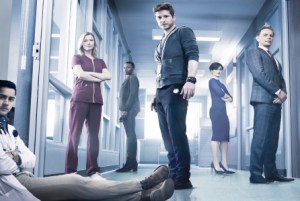
THE RESIDENT: L-R: Manish Dayal, Emily VanCamp, Shaunette RenŽe Wilson, Matt Czuchry, Valerie Cruz and Bruce Greenwood in THE RESIDENT premiering midseason on FOX. ©2017 Fox Broadcasting Co. Cr: Justin Stephens/FOX

Bargaining with IV drug users for drugs. In one scene, the younger protege is seen bargaining with an IV drug user so that she’ll give into his demands and it becomes a bartering of sorts like buying food in an open market. Hands down, the physician should decide what his bottom line is and not waiver from it.

Effective CPR is “until the ribs crack”.  Effective CPR is just the amount of compression depth it takes to generate a pulse that can be felt. It is a risk factor that the patient’s ribs can break, but it is not the clinical guideline we shoot for.

An environment of “no questions asked” is dictated. The senior resident gives his junior resident this mantra: “Do what I want you to do. No questions asked.” Again, this type of environment is intolerable in the hospital setting and should never be dictated . . . like ever. A questioning environment has been shown to increase patient safety and smart hospitals are encouraging this very thing. Most hospitals also have a mechanism in place to go above the bedside medical team if family concerns are not being addressed.

A surgical resident get first dibs on the new, bright, shiny, robotic surgical wonder. Need I say more?

The attending surgeon pretends to do a surgery. Remember the new shiny surgery robot? Remember the attending from Part I that has obvious hand tremors and should not be doing surgery? Did I mention this attending surgeon is an ego maniac (he even leaves positive medical reviews for himself)? Well, since no one has ratted out this well . . . rat . . . it must be him that first uses the machine. However, physically, he can’t do it. So he sets up a ruse where it appears he’s doing the surgery where in reality his uber smart, highly capable resident is. I cannot tell you how ethically bad this is on so many levels.

There are several issues that surround a lengthy medical code in the ER. The IV drug user that bargains for drugs in the beginning codes related to a heart infection. She is coded for nearly 30 minutes— the junior resident keeps it going for that long because of his emotional connection to the patient. Of course, just as he decides to call it, the patient gets her pulse back.

The senior resident is mad at him because he’s just revived a “vegetable”. Honestly, it is the senior resident’s job to watch their underlings. There would have eventually been an attending doctor overseeing this code. So, the person least responsible for the length of this code is the junior resident. Everyone higher up on the totem pull has the ability to stop the code.

Hospitals keep vegetative people alive for money. This is so patently false it’s laughable, but is probably more believable for the general public because many think hospitals will do anything to meet their bottom line.

I’ve been in nursing twenty-five years this May. I first started in adult ICU nursing and in that unit in Kansas there was avid discussion of clinical pathways to put people on to withdraw unnecessary (futile) care. In fact, I would say I’ve seen the opposite— at times a push to take people off of life support sooner then may be warranted from both the family and/or medical providers.

A resident taking it into their own hands to discontinue life support. Because the patient has no hope for life and he sees that the family is in no hurry to stop life support, the resident decides to turn off the machines. Fortunately, he is caught by a fellow resident and quickly turns back on the life support and the patient suffers no ill effects. Again, highly unethical. How about . . . having some hard conversations with the family about the viability of their daughter and helping them come to this decision? I know this is painted in the episode as a merciful thing for this doctor to do, but it would have been murder if he succeeded. He does not have permission to discontinue life support and cannot do so on his own accord. Period.

Also, there is no reason to be dumping a bucket of ice cold water onto a patient’s face . . . like ever.

I guess I should be thankful to The Resident for giving me all this blog material. It’s the only thing good about the show.

Tell me what you think of The Resident? If you’ve seen an episode, will you keep watching?


Fox’s The Resident: Everything Stereotypically Bad About Hospitals (Part 1/2)

Seems like this television season there have been quite a few new medical dramas hitting the airwaves. I’ve done a four part series on The Good Doctor (Part 1, Part 2Part 3, and Part 4) and 9-1-1. Newest onto the small screen is Fox’s The Resident.

It will make you hate hospitals and everything about them.

There are a few that say to me, “Why try and correct all this misinformation? Most people know it’s not factual.” It might actually surprise you how many people view what they see on television as real and true. The recent demise of crock pots everywhere after an episode This Is Us led the company to release a statement about their safety.

The Resident highlights every horrible hospital stereotype . . . literally on the planet. This is pretty amazing for a show to do in one hour.  The show centers around two residents: the senior resident Dr. Conrad Hawkins and a new bright and shiny resident, Dr. Devon Pravesh. One big problem . . . it’s not even clear what type of residents they are.

Hawkins is the gunslinger. The medical doctor who knows everything under the sun and bucks corruption (and common sense) at every possible turn. He is brash, arrogant, and needs a few classes in mentoring and bedside manner. Well, not just him, but really the entire cast of doctors from the senior attending with tremors who shouldn’t be doing surgery anymore to the wicked smart surgical resident who, in a room full of people (and on the fly by no less) states to a family that the result of their loved ones surgery was “Prescott’s dead.”

Sweet.

I don’t even like this show a little bit. As it stands now, I personally find nothing redeeming about it. Not only medically, but socially as well.

Here is just a short list to get us started on what’s wrong with The Resident.

An open appendectomy. Appendectomies are mostly done laparoscopically. In this patient, it’s even commented that it hasn’t ruptured so it should be the easiest of all appendectomies. However, this patient has a heinously large incision and the attending physician (the one with the horrible hand tremors) nicks an artery and the patient dies.

A short surgical code. It is true that surgeons don’t like deaths to occur in the actual OR. Considering that, the surgical code (compared to a medical code later) is laughingly short. Like big shrugs around the room after a few minutes— golly gee, our patient is dead.  Not sure how we treat hemorrhage.

The cover-up. I can’t say with one-hundred percent certainty that no bad medical outcome is hidden, but I will say that the climate is definitely supporting the truth coming out in the hospital setting. In this television episode, it’s plainly clear that this attending surgeon has a reputation for bad outcomes and the staff has been covering this up for a while. After the patient dies, they develop “the story” to cover up the surgeon’s negligence. Hands down, this puts too many careers at risk and most people aren’t willing to take that chance. This is beyond “playing along”. Most hospitals have corporate compliance hotlines where concerns can be left anonymously. Honestly, it would increase the tension of this television show to have someone trying to expose him.

Next post, we’ll continue our discussion on the medical inaccuracies of The Resident.


Radiation and Spiderman

So pleased to have back our radiology expert Shannon Moore Redmon.

Welcome back, Shannon!

When in elementary school, our teacher rewarded good behavior with an episode of Spiderman. The thought of a once nerdy boy turned superhero, gave all the kids in class grand ideas of swinging from tall buildings and capturing bad guys with web like nets. Thankfully, no one ran out and searched for spiders to bite them.

However, when humans are truly exposed to radiation, we do not acquire superpowers like our wonderful Spidey, but overdoses of radiation lead to a variety of sickening symptoms or cancer, depending on the size of the dose.

Peter Parker’s symptoms do not demonstrate the real effects of radiation exposure.

  • Peter is bitten by a radioactive spider.

First, a radioactive spider does not contain the ability to provide humans with special powers. Peter’s hand develops a large boil on the area of the bite, but instead of going to the hospital, the teenager goes home and lies down.

This is science fiction, but wouldn’t a normal teenager at least tell the grownups living in the same house of his insect bite and go see a doctor? My boys would.

  • Peter feels the results of the radiation in his body and his DNA changes.

Some real world medical tests use radioisotopes or expose patients to radiation, but the small dosage rarely manifests into any biological changes. We receive more radiation exposure from our televisions, microwaves and cell phones we use every day then we do from medical tests.

Nuclear Medicine is a radiological modality where small doses of radioisotopes are given to patients to discover diseased areas within the body. These scans can detect cancers, non-functioning organs or other medical conditions, such as Alzheimer’s disease.

Fluoroscopy, another radiology modality, uses live x-ray beams to study the stomach and intestines. Technologists and radiologists must protect themselves with lead aprons, gloves, and thyroid shields. They also wear dosimeter badges to record their exposure.

  • Peter wakes up no longer needing glasses and his body has evolved into a buffed-up physique.

If only radiation exposure was that transformative. We’d all be rushing to our local x-ray departments for the latest dose of tummy tightening effects.

Larger doses of radiation are destructive, but in the case of a cancer patient, the damaging exposure can be helpful. Medical facilities use therapeutic radiation to attack malignant tumors, shrinking or eliminating them.

According to the NCBI, there are two types of radiation exposure, acute and late onset disorder. If you want your character to die quickly, then review the following symptoms:

Acute disorder:

Alopecia – hair loss
Skin erythema – redness of skin
Hematopoietic damage – destruction of blood cells
Gastrointestinal damage
Central Nervous damage

Late onset disorder:

Cancer
Non-cancer disease
Genetic effects

So, for now, Spiderman fan’s need to steer clear of those radioactive insects. But if your character has a medical condition that requires a dose of radiation, the positive effects can be as life changing as Spiderman’s.

********************************************************************************************

Shannon Moore Redmon writes romantic suspense stories, to entertain and share the gospel truth of Jesus Christ. Her stories dive into the healthcare environment where Shannon holds over twenty years of experience as a Registered Diagnostic Medical Sonographer. Her extensive work experience includes Radiology, Obstetrics/Gynecology and Vascular Surgery.

As the former Education Manager for GE Healthcare, she developed her medical professional network across the country. Today, Shannon teaches ultrasound at Asheville-Buncombe Technical Community College and utilizes many resources to provide accurate healthcare research for authors requesting her services.

She is a member of the ACFW and Blue Ridge Mountain Writer’s Group. Shannon is represented by Tamela Hancock Murray of the Steve Laube Agency. She lives and drinks too much coffee in North Carolina with her husband, two boys and her white foo-foo dog, Sophie.

The Good Doctor: Season 1 Episode 4

I wasn’t sure if I would continue to do these posts on the new ABC drama, The Good Doctor. One of the first posts I did got one of the largest responses ever on my FB page. The responses were 50/50 for and against the show. Many people want to champion the series because it highlights someone with autism working in the medical field.

The other half agree that if you’re going to highlight a medical drama— it would be nice to have it be the teeniest bit accurate. I’m not asking for a lot . . . just don’t give patients false hope or have them get such a skewed view of medicine that they trust medical professionals less. We’re already fighting that battle.

My disgruntlement with the show is not the fact that they highlight a character with autism— it is with the medical aspects of the show and how they handle their patients.

That is where my fight is . . . so let’s carry on.

In episode four, the main story highlights a woman who is pregnant with a child who has a large spinal tumor. The woman has already miscarried two children as the result of a clotting disorder she suffers from.

Issue #1: All surgeons cannot do all things. This continues to be a big complaint of mine for the show. One of the general surgery attendings is also a specialist in fetal surgery. I cannot tell you how specialized a field fetal surgery is. There are only a handful of these specialized doctors in the country. A general surgeon is not even, in their right mind, going to attempt something so risky for a notch on their proverbial belt. It would be negligent for them to do so.

Issue #2: OR’s are well lit. In this particular episode, I noticed all the OR scenes are shot in relative darkness. I’m sure this is so it looks uber cool for the viewer and there are times when OR light is dimmed, but we do generally want surgeons to be really able to see what they’re doing. Which is why they get really big lights.

Issue #3: Medical equipment called for— never placed on the patient. During the first surgery to remove the tumor from the child, the mother suffers a heart attack and they place her on a balloon pump that mysteriously never gets put in place. These are obvious pieces of equipment and it is never shown or mentioned again.

Issue #4: Surgery without patient consent. Despite the pretty serious complication of the first surgery, the mother is gung ho to go at it again, despite having had a heart attack. That’s actually believable. Mothers will do anything to save their child. What’s a little surprising is how gung ho the surgeons are. What follows are some pretty mind boggling discussions of who lives and who dies under what circumstances.

The attending surgeon offers a plan to not tell the mother that her surgery will end up being an abortion to save her life. That they’ll essentially lie to her telling her they’re going to take her to the OR for another attempt at saving the infant while really going in to end his life. On a one to ten scale of how unethical a plan that is to even be mentioned is like one hundred. The better person to float out an idea like that? A medical student. A resident. The attending? Those are the people teaching our young doctors— please have them be a representation of some sort of ethical boundary.

To be clear, the surgical game plan can change during an operation, but to go in knowingly deceiving a patient is malpractice.

Issue #5: The baby is just as monitored as the mother during the surgery.  In the scene of the second fetal surgery, the baby is just lying there on the mother’s stomach with no monitoring equipment. The baby is monitored as thoroughly as the mother.

What are your thoughts on The Good Doctor?

Medical Review of Fox’s 9-1-1

I’m so happy to be back blogging! I hope everyone had a fantastic holiday season and is ready for a new year. Today is officially my 20th wedding anniversary! Can you believe that? I know I can’t. It’s crazy to think how much time has gone by.

Considering the occasion, I thought it would be best to write a positive (well, mostly positive) review of a new TV show— Fox’s series 9-1-1. I know . . . you can pop your eyeballs back in. This is truly a rare event considering much of this blog’s time is spent skewering medical inaccuracies in print, movies, and the small screen.

9-1-1 is a series devoted to dispatch, police, and fire calls. I’ve watched the first two episodes and was pleasantly surprised at how much I liked it. Now, it does have some problems. Writing completely to stereotype would be the biggest.

Let’s look at what they did well.

1. The characters face consequences for their actions. I’ve said all along that it’s okay for medical people to do bad things in fiction, but there must also be consequences for their actions. The point of this are many. It increases the conflict in the story AND reflects real life. Too many times in fiction medical people are shown doing bad things without consequence. One firefighter is shown facing some serious repercussions for his poor (saying that lightly) choices.

2. There is respect for HIPAA and also how hard that is for medical people. HIPAA is the patient privacy law. Because of HIPAA, most of us who work on the front lines (EMS and emergency departments) rarely ever hear how our patients do after they leave our care. This is, flat out, not easy for any of us and it makes closure difficult.

3. Shows the problem of poor coping mechanisms. It is true that healthcare people do not always have the best coping mechanisms. Hello, to all the nursing units with the mandatory chocolate drawer. Some develop addictions  and can have bad co-dependent relationships. It was nice to see highlighted that the stress of this work does take an emotional toll.

4. Highlights the difficulty of work/life balance. Of course, all professionals face work/life balance issues, but I also feel like the nature of our work makes it hard to feel like you’re getting a break. If you’re taking care of a medically/terminally ill loved one at home, and then go to work doing the same thing— there can be little room to breathe.

5. Medical information was not distracting. The medical information was kept pretty light in the first two episodes and not too distracting. There were a few minor medical errors I’ll keep close to the vest for now.

Have you watched the new Fox show 9-1-1. What did you think?

The Christmas Season

Hello Redwood’s Fans!

Everyone getting ready to get their Christmas on? I know I definitely am. We already have our Christmas trees (yes, three!) up. Christmas cookie baking is on the horizon. There’s really not much I don’t love about the season.

I’ll be on a blog break until after the first of the year. I’ll actually be working on revising and updating many of these posts. I am still answering your medical questions (that are writing related) and you can reach me at jordyn@jordynredwood.com.

So, until next year– Merry Christmas!!

Care of the Burn Patient

Linda Asks:

In my middle grade novel my main character’s dad was a fireman in NY.
He was present during the collapse of the World Trade Center buildings.
He was burned severely and is in the hospital – near death.

My main character remembers his last conversation with his Dad in the hospital right before he dies.

The dad is hooked up to all kinds of beeping machines and is wrapped in white gauze.
After he talks to his son for the final time, he pushes a button for more morphine.

Questions:

Do they still wrap burn patients in gauze?
Is morphine used on severely burned people?

Jordyn Says:

From the point of view of your character– yes, burns are wrapped in gauze. They are specialized dressings, but a character aged 10-13 could perceive it as gauze only.

Yes, morphine is still used for pain.

My only concern is this character having a conversation with his dad. You don’t describe the nature of how he was burned, but a severely burned patient, particularly one close to death, is likely on a breathing machine and, therefore, unable to speak to his son.

You could change the scene to be that he’s so sick that they are getting ready to intubate the character’s father, and the medical team gives them a few moments to talk before they put the father on the breathing machine. He could still die quickly after from his injuries.

The Use of Hypothermia Post Cardiac Arrest

Emily Asks:

I am playing around with one of my character’s being shot life threateningly, but of course it’s gotta be something he recovers from with time.

This character is in his late 20s and in good health before the incident takes place.

At first, I was toying around with the idea of making the gunshot wound similar to what Kate Beckett had in the show Castle at the end of season three. The trouble is, I do not know how medically realistic her wound was, as you have pointed out Castle’s medical inaccuracies before. If you have possibly seen the episodes in question, could you give me some feedback on the medical aspects of Beckett’s shooting?

In relation to this, her heart supposedly stopped twice during the whole ordeal. I have been researching induced comas, and while they seem to be used for patients having more of a direct injury to the head, in the case when a victim’s heart stopped twice and is resuscitated both times, would there be any reason to keep them in an induced coma for a time due to lack of oxygen to the brain?

Then, after researching, I am playing around with giving this guy a collapsed lung from the bullet, which is small caliber.

1. In what hypothetical cases would this kind of injury require immediate surgery?

2. Are there any complications that could be serious enough for the said character to have to go back into surgery at a later time?

3. My character happens to be a bass singer for an acapella band. Would a collapsed lung affect his career at all even after he made a full recovery?

Thank you for taking the time to read and respond to my questions!

Jordyn Says:

Beckett’s Gunshot Wound:

I had to go back and find some videos that were related to this. Shockingly, I found this scene pretty medically accurate. I found one that showed her coding one time. Though I definitely could have missed some. The determination to put someone in therapeutic hypothermia or targeted temperature management (as now termed) related to their heart stopping is dependent on whether or not they wake up immediately after their code.

A patient that wakes up spontaneously and quickly after a pulse is restored has intact neurological function. Those that remain comatose have a concern for neurological injury related to oxygen loss to the brain during the resuscitation and therefore the medical team could choose to put the pt in a “hypothermic” state to try and prevent this neurological injury.

This is slightly different from a medically induced coma that patients with traumatic brain injury might be placed in to prevent brain swelling. The difference is actively cooling the patient. I have not seen the use of hypothermia in the traumatically brain injured population (though this does appear to be an area of study), but use of medically induced comas, yes.

There are definite guidelines that the American Heart Association has put out that outline this course of treatment. You can find one such article here.

If your character codes and doesn’t wake up– then this would be a reasonable course of action medically, but written under the guidelines in the article.

In regards to your specific questions.

1. It’s more likely than not that a gunshot wound to the chest would go to surgery, particularly if the patient presents with any abnormal vital signs especially low blood pressure. There’s just so much there that could be damaged. The heart. The lungs. The blood vessels.

2. Yes, there could be a number of scenarios where the character could require more surgery such as a blood vessel that’s leaking that’s not found the first time during surgery and continues to bleed. Infection– specifically some sort of abscess formation could be another reason, but that would take some time to develop.

3. I don’t personally foresee a problem with his acapella career after his lung is healed. It would take time to get to the point where he was. If you wanted to affect his career, a patient who is intubated (placed on a breathing machine) can develop vocal cord damage as a rare complication.

Best of luck with your story!

Criminal Minds: Can a Patient be Admitted for Psychological Distress?

In a recent episode of Criminal Minds, a woman was nearly shot and killed by a madman operating a drone. She is saved and uninjured, but is admitted to the hospital just in case she begins to suffer some psychological distress.

Can this really happen?

The situation as portrayed on television— no.

When admitting someone emergently for a psychiatric problem, one of two things needs to be a concern. Either the person is a threat to themselves, to another, or both. You might hear a provider ask, “Is the person expressing HI or SI?” which stands for suicidal ideation or homicidal ideation.

If a person is expressing either or both of these concerns then a couple of things happen. The patient first must be medically cleared by a physician to ensure that there are not any coinciding medical concerns. Once this takes place, they then are put through a mental health evaluation.

Once a mental health evaluation is complete, it is decided what type of psychiatric services the patient may require. Sometimes, it is admission under an involuntary hold. Other times, the patient may be connected with outpatient services.

Think about the many events that have happened just in the US where people will be suffering psychological distress, but are not expressing suicidal or homicidal thoughts. The  devastating hurricaines. The mass shooting in Las Vegas. Put simply, if we admitted every patient that we were concerned for the potential of psychological distress outside of expressing HI or SI— we’d quickly run out of hospital beds. Plus, patients expressing these concerns should not be placed on a medical floor unless they also have co-existing medical problems that they need treatment for. Also, in that case, they require one on one observation.

Although a nice thought, you do have to have a mental concern other than psychological distress from surviving a potentially life-ending event to be admitted into the hospital.