One Brave Cookie: Alice J. Wisler

Often times, I will read biographies as research to delve into what it might have been like to live in the shoes of the person I’m trying to portray fictionally. Some experiences are beyond our imagination and first hand accounts help us to draw these characters more realistically.

I’m pleased to have Alice here at Redwood’s Medical Edge today discussing her son’s battle with cancer. She’s so brave to share her story with us and I’m very thankful she chose to give us insight into some of the emotions that surrounded her during that time of her life.

Welcome, Alice.

In 1996 we had tickets for a three-week trip to Japan. As I packed for our trip, excitement filled me.  I couldn’t wait to experience the reactions of my three kids as we flew to Japan where I grew up as a missionary kid. My picnic-plaid journal would record their words and their vacation memories.

My husband and I hoped three-year-old Daniel would be fully recovered from his surgery and back to his energetic self by the date of our June departure.  It sure looked promising because the night of his surgery he did cartwheels in our grassy lawn, laughing with friends who stopped by to check in on him.
Right before Memorial Day when people were getting their coolers stocked for picnics, the pediatrician called with news.  The lump on Daniel’s neck was not Cat Scratch Fever or TB as earlier presumed. The surgery from the previous day showed that my son had a mass that consisted of small round blue cells.
That weekend I became familiar with a childhood cancer called Neuroblastoma.  At UNC Hospitals in Chapel Hill, NC, Daniel had another surgery, a Broviac catheter inserted through his body—into the right side of his neck and out his back— and the start of his first round of chemotherapy.  The catheter was the line used to dispense his chemo.  Nurses taught us how to flush the line, clean the area of skin it was near, and tape the catheter to his back for safety purposes.  We also learned the names of chemo drugs and found out that the narrow cot placed alongside Daniel’s bed was not as comfortable as it looked. It didn’t really matter; hospitals are not known for places of rest, regardless of the type of bed provided.
Daniel’s prognosis looked good—for a kid with cancer.  Over the months of week-long hospital stays, the tumor responded to the harsh medications.  He lost his hair, he hated being bald.  He made friends with the oncologists and nurses, teasing and laughing with them.  He threw up and felt weak and tried to be brave.  I recorded each day in my picnic-plaid journal.
In the hospital chapel he asked God to heal him.  “Please God, take away my boo-boo.” He liked to hear how people around the world were praying for his health.
But on a balmy day in January after his chemo and radiation treatments ended, he felt weak.  I took him to a scheduled check-up at the oncology clinic.  At nine his blood pressure was fine, but there was some concern about his blood counts.  His hematocrit was dangerously low.  The nurse was ready to take another blood sample to test again when Daniel complained of not being able to breathe. “I just wanna go home,” he told me. The doctor was called in; no pulse could be found.  Daniel was wheeled to the ER.  He coded once he arrived, was resuscitated, and coded again.  A staph infection was discovered to be the culprit.
Daniel lived on the ventilator in the PICU for five days.  When the EEG showed he had no brain activity except for voluntary, I asked for another.  But the second results matched the first, so we removed him from the ventilator, saying our good-byes. Yet Daniel’s heart and lungs continued to function. Since the staff in the PICU could do nothing more for him, his oncologist asked that we consider moving him to a room on the cancer ward.  “We want to take care of him and of you,” he said.  “Daniel is our patient.  We remember when he walked down the corridors swinging off his infusion pole.” I looked at my son, a calm figure with his eyes shut, morphine pumping into him. Surely, God would provide a miracle and Daniel would wake from his comatose state and jump on the bed as he had before.
When Daniel breathed his last in my arms on a cold night at the beginning of February, I was six months pregnant.  My baby within kicked with life as my bloated and compromised child ceased to move. 
I felt abandoned by God. I didn’t care to live.  During the next days, I didn’t want another casserole or vase of flowers brought to my front door. I wanted my son back in my arms—a chance for him to live life outside hospital walls with a new crop of hair as he played with his siblings.

Instead, I would have to learn to survive his death.  It would mold me, push me, shape me, and change me.  I would feel God’s presence again.  In time, I would walk with a new faith, one harbored within a broken heart.

***********************************************************************

Alice J. Wisler is the author of RAIN SONG (Christy Finalist 2009), HOW SWEET IT IS (Christy Finalist 2010), HATTERAS GIRL and A WEDDING INVITATION—-all by Bethany House Publishers. In memory of her son, she teaches online grief-writing courses and at conferences across the country.  Visit her website: http://www.alicewisler.com/.

Dr. Richard Mabry: Ideas 101

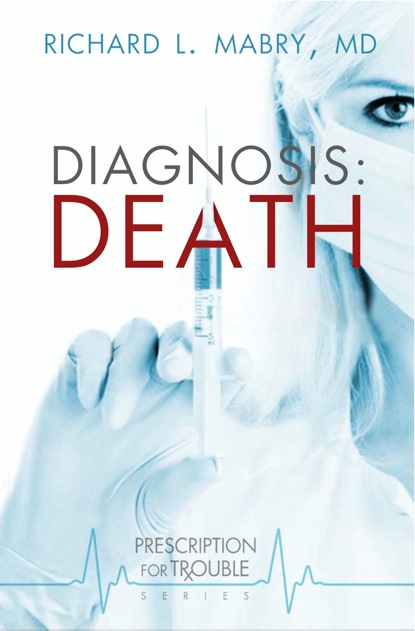
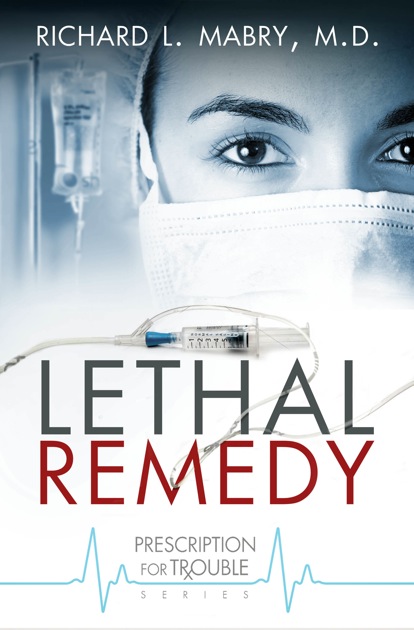
It’s always a pleasure to have Dr. Mabry here at Redwood’s Medical Edge. He’s a great supporter of this blog and it’s my pleasure to be hosting him Monday through Wednesday this week in support of the release of his fourth novel, Lethal Remedy. Don’t forget, leave a comment on any of Dr. Mabry’s posts and you’ll be eligible to win a copy of Diagnosis Death and a signed copy of his latest novel, Lethal Remedy. Must live in the US. Winner will be drawn midnight MST on October 7th and announced here on October 8th. This originally posted April 1, 2011.
 “WHERE DO YOU GET YOUR IDEAS?”
I don’t believe I’ve ever spoken to a group of non-writers without being asked this question: “Where do you get your ideas?” I’ve been tempted at times to tell them I use a book titled 1001 Story Ideas For Writers and send them scurrying to find that non-existent volume. Or refer them to a spurious website called http://www.freebookideas.com/. But instead, I tell them the truth. I get my ideas from following the advice given me years ago by author Alton Gansky. “Ask yourself the question: ‘What if…?’”
Let me give you an example. My third novel of medical suspense, Diagnosis Death, officially releases today. In it, Dr. Elena Gardner, is accused of the mercy killing of several patients, one of whom was her critically ill husband. The twist is that she can’t really defend herself, because she can’t be sure her accusers are wrong. Sorry, you’ll have to buy the book to learn more about it, but let’s backtrack to the way I came up with that plot.
About the time I was casting about for a storyline for this book, the aftermath of Hurricane Katrina brought forth a story that caught my eye. A colleague of mine in New Orleans was accused of ending the life of four terminally ill patients trapped in the unspeakably difficult conditions of the hospital where she worked with no hope in sight of rescue. She was subsequently exonerated in the courts, and I won’t say anything further here about the case, but it brought to mind the subject of euthanasia and end-of-life decisions.
There was another factor in my choice of subject matter. I had first-hand experience with withdrawal of life support, not just as a physician, but in the case of my first wife, who suffered a devastating stroke. I knew how it worked, and knew all too well the emotional roller coaster associated with making that decision, as well as the guilt that followed it. So that was the way I got the idea that evolved into Diagnosis Death.
Alton Gansky told the class I was in that he keeps a file of three by five cards with story ideas, and it’s unlikely he’ll ever run out. I don’t have such a reserve, but I do have an almost endless supply of potential material. I read the newspapers. I watch TV. I talk with other people. In the world around us are story lines galore. We just have to use a little imagination and ask ourselves, “What if…?”
Here’s one final example. I read not long ago in a medical journal about a great new antibiotic, effective where other drugs had failed. So I asked myself, “What if that wonder drug really has potentially dangerous side effects, but someone falsified the research data to make it look good?” That’s the theme, by the way, of my fourth novel, Lethal Remedy, due out September 1.
So ask yourself, “What if…?” Then start writing.
Look at the news today… what plot idea can you come up with?
******************************************************************************
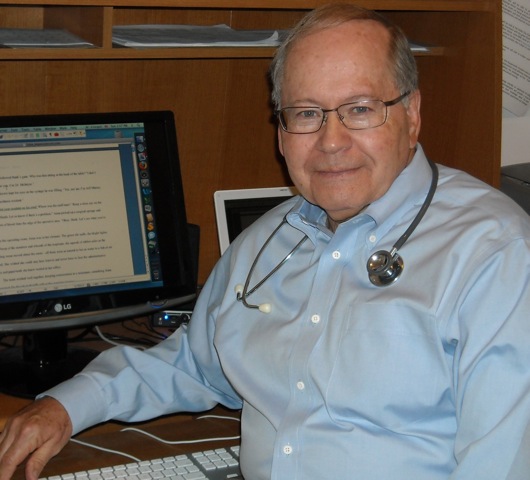
Dr. Richard Mabry built a worldwide reputation as a clinician, researcher, and teacher before retiring from medicine. His published series, Prescription for Trouble, under Abingdon Press includes Code Blue, Medical Error, Diagnosis Death and Lethal Remedy. Dr. Mabry is also current Vice President of the American Christian Fiction Writers group. You can learn more about him at his website and follow him on his blog.

Warning: Technical Jargon Ahead

We’re continuing our celebration of Dr. Mabry’s fourth novel.

Welcome back, Richard!

Writing a novel that involves one’s profession is a definite two-edged sword. On the one hand, most people are interested in sports or medicine or law (just to name three examples) so there’s an automatic reader attraction from the subject matter alone. On the other hand, it’s easy for an author to get bogged down in the jargon of his or her profession and completely lose the reader.

I love baseball. I played some semi-pro ball, and coached it for decades. But suppose I wrote a novel about baseball (I have—it’s just not published…yet) and included this dialogue. Would it be meaningful to you?
Locked up in the final frame. Runners at the corners. Two down.  Full count. Here’s the pitch, and Young lofts a Texas leaguer to shallow right. Close play at the plate. Borbon executes a perfect fade-away slide. Rangers win.
Really held your attention didn’t it? Well, actually, it did mine, but I understand the language. If you didn’t, you were lost.
I really enjoy reading the legal thrillers of John Grisham. But suppose he wrote a scene like this:
“I’m filing a writ of mandamus and requesting a habeas corpus hearing under section 337, section a, sub paragraph ii of the judicial code.”
The judge rapped his gavel. “The bailiff will release the prisoner.”
Heady stuff, huh? No? You didn’t understand it? Neither did I. And at that point I’d probably put the book aside for another day.
Medical writers face the same problem. The trick is to use the language and terms doctors might ordinarily use, but slip in an explanation along the way, preferably without being too obvious about it.
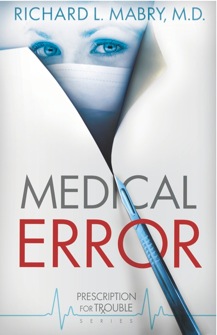
Here’s an example from my second novel, Medical Error:
“It’s not blood loss,” Jenkins said. “He’s having an anaphylactic reaction. Could be the blood. Did you give him an antibiotic? Any other meds?”
Anna’s mind was already churning, flipping through mental index cards. Anaphylaxis—a massive allergic reaction, when airways closed off and the heart struggled to pump blood. Death could come quickly. Treatment had to be immediate and aggressive.
It’s possible to use terms that are totally foreign to the lay reader. They may even be open for misinterpretation. Here’s an example of that, also from Medical Error:
He’d see her at M&M. Not the candy. Anna wished it were. No, this was Morbidity and Mortality Conference, the meeting each month when the staff discussed their patients who had suffered adverse consequences from treatment. “Morbidity” sounded so much better than “something went wrong.” And “mortality” was more acceptable than “they died.” But when it came to assigning blame, there was no sugar coating her.
So the next time you read a novel written by someone familiar with a particular field, see how good a job they’ve done in not losing you in technical terms. If you’re drawn in by the setting of the novel, whether operating room, courtroom, or football field, but don’t have any trouble understanding what’s going on, silently tip your hat to the author. They’ve done their job.

Dr. Richard Mabry: This Little Pill Went to Market

Monday through Wednesday this week we’re celebrating Dr. Mabry whose fourth novel is coming out this week. Leave a comment on any of his posts and you’ll be eligible to win Diagnosis Death and a signed copy of Lethal Remedy! Must live in the US. Winner will be drawn Friday, October 7th, 2011 at midnight and announced Saturday, October 8th!

                Welcome back, Richard!

                Ever wonder how that pill or capsule you just took came into being? It’s a complex process, and one that the average consumer never considers. As I often said when I was still practicing medicine, most patients don’t care how it’s done. They just want to be well, and they’d prefer it occur retroactively.

Sometimes accidents lead to great discoveries. The prototypical event was the discovery of penicillin by Sir Alexander Fleming. He was a great researcher but a poor housekeeper, and returned to his laboratory on September 8, 1928, after a month’s holiday to discover in the midst of a pile of Petri dishes that one of his bacterial cultures was contaminated by a fungus, and that the bacteria hadn’t grown in the area of the fungal colonies. After calling the substance “mould juice” for a while, he eventually named it after the fungus, which was Penicillium notatum. However, it wasn’t until 1941 and the outbreak of World War II that the work of Florey and Chain allowed penicillin to be mass-produced in order to treat war wounds.
  Things are different now. Every major pharmaceutical company has huge sections and large budgets devoted to R&D—research and development. Exact figures aren’t readily available, but it’s generally accepted that most new compounds never progress beyond the Phase I stage. By the time some of them do eventually make it through all the necessary steps, there’s been a massive amount of time and money invested in them. That’s why pharmaceutical companies are anxious to recoup their investment and make a profit before their patent on the preparation expires and the generic manufacturers—often derogatorily referred to as the “me too” companies—take advantage of the opportunity to produce the same medication without all the R&D costs. Patents are generally filed early in the development process, because although they typically run for twenty years, the drug may not reach the market until a lot of that time has expired.
 Bear in mind that before reaching the stages of human testing, drugs have been tested in the laboratory using a variety of animals. Only if they pass these tests do they enter into the phases of human trials necessary to seek eventual approval for marketing. (http://www.nlm.nih.gov/services/ctphases.html) 
In a Phase I trial, researchers test a new drug or treatment in a small group of people for the first time to evaluate its safety, determine a safe dosage range, and identify adverse effects. Most drugs never make it beyond this phase, generally because of side effects. This is when the company must consider a decision to scrap further research on that compound, even though time and money have been invested in its development.
If a drug makes it to the Phase II trial, it’s given to a larger group of people to determine its effectiveness and observe for adverse consequences. There’s still not been a comparison with other known effective drugs. The emphasis is on safety and effectiveness, although some dose-ranging tests may occur, determining the lowest effective dose without side effects.
Phase III is the true test of the drug, because at this point carefully designed studies compare it with a known and already approved compound for effectiveness, still watching for adverse effects and frequently using different dosages to determine the optimum one. Following successful Phase III testing, an extremely detailed application is filed with the Food and Drug Administration. (http://www.fda.gov/Drugs/DevelopmentApprovalProcess/HowDrugsareDevelopedandApproved/ApprovalApplications/NewDrugApplicationNDA/default.htm)
            After the drug comes to market, testing isn’t finished. Pharmaceutical companies continue to gather reports from physicians about the drug’s effectiveness and—most important—any adverse reactions. This Phase IV testing is the reason patients are urged to report problems with their medications to their doctors. Minor side effects such as nausea are common. But severe side effects send up a red flag. This occurred when a popular antibiotic class turned out to be the cause of tendon ruptures in a significant proportion of patients treated with it. Phase IV reports can result in anything from a “black box warning” on the information that accompanies the prescription to withdrawal or modification of the offending compound (as happened with an antihistamine that posed a heart rhythm problem to certain patients).
            So the next time you take a pill or capsule, know that a lot of effort has gone into its development. And, if you wonder whether everyone involved in the process played fair and reported all their results accurately…well, they undoubtedly did, but what if they didn’t? That’s the premise of my next novel, Lethal Remedy. Hope you read it and enjoy it. (http://www.amazon.com/Lethal-Prescription-Trouble-Richard-L-Mabry/dp/1426735448/ref=sr_1_1?ie=UTF8&s=books&qid=1305904911&sr=8-1)
*******************************************************************************

Dr. Richard Mabry built a worldwide reputation as a clinician, researcher, and teacher before retiring from medicine. His published series, Prescription for Trouble, under Abingdon Press includes Code Blue and Medical Error. Diagnosis Death released today! Dr. Mabry is also current Vice President of the American Christian Fiction Writers group. You can learn more about him at his website and follow him on his blog.

Contest Announcement

Since the blog calendar is becoming full– what a blessing!– I’ve decided to post upcoming events and blog topics on Saturdays.

This week, we’re celebrating Dr. Richard Mabry. His fourth novel in the Prescription for Trouble series is out this week. His latest novel, Lethal Remedy, is now available. Richard’s novel Medical Error finaled in the 2011 ACFW Carol Awards.

Richard will be posting Monday-Wednesday this week. Leave a comment on any of his posts and be eligible to win a copy of Diagnosis Death and a signed copy of Lethal Remedy! Must also live in the USA. Winner will be drawn at midnight MST on October 7th and announced here on Sat, October 8th.

Also, on Friday will be Alice’s first hand account of dealing with her son’s death from cancer. First person accounts allow us to live for a moment in that person’s shoes and I’m very thankful Alice has decided to share her story with us.

Have a great week!