Drug Abuse in America: Part 1/3

Dr. Edwards is here for his monthly post and I thought his topic of choice was very timely. He sent me a piece on dealing with chronic pain patients in the ED. This is a problem for every ED… including pediatrics.

In the past two years, I’ve been shocked by the number of chronic pain patients we are seeing in those under the age of 18. If you’re writing an in-depth novel with an ED worker in the center, this is one area of conflict you could explore.

How do we deal with these patients? Is there a component of drug addiction in this patient population? To say no for all cases would not be the truth either.

I think this trend bodes for some introspection on all of us. Here is Dr. Edwards post. On Wednesday and Friday this week I’m going to explore this topic more in depth and why there might be such an explosive prescription drug abuse problem in the US… and believe me… there is.

Desperately Seeking

Frank J. Edwards, MD

I hadn’t been practicing emergency medicine very long when I saw this particular patient, a thin woman in her mid-seventies wearing an old fashioned lace-collared evening gown.

“Doctor, I’ve passed another kidney stone,” she said.

My mind’s eye narrowed.  Was this a narcotic seeker?  Kidney stones are like white-hot ice picks thrust into one’s flank and violently twisted, over and over again.  Marine drill sergeants cry with kidney stones.  But there she sat smiling.  I was young.  Did she take me for an easy mark?

“Oh really,” I said.  “Are you looking for some medication, ma’am?”

“Heavens no,” she said.  “I thought you might like to see it.  I have these things all the time.”

“See it?”

Out of her cloth handbag, she fished a chunk of coarse roadbed gravel and plopped it in my hand.  Driving in the hospital entrance that muggy Sunday morning I had noticed a pile of similar stone.

“You can keep it if you like, doctor,” she said.

Since then, I’ve seen hundreds of patients feigning illnesses, but unlike the lady of the road gravel, they definitely want something more than the smidgeon of attention and sympathy she needed.   They may have headaches, back spasms, abdominal cramping or severe pelvic pain, but kidney stones do remain a common theme.  And, unlike her, they come in writhing and wincing.  When asked to give urine, they may prick their fingers and squeeze a drop of blood into the sample so the dipstick comes back positive. 
The typical drug seeker will have a genuine history of a disease characterized by recurrent episodes of agonizing pain.  Along with kidney stones, such conditions include migraine headaches, lumbar disc disease, fibromyalgia, inflammatory intestinal disorders (Crohn’s disease, for example), and pelvic problems such as endometriosis and interstitial cystitis.   Thanks to the powerfully addicting properties of the narcotics used to treat their pain, a handful gradually awaken in the labyrinth of Morpheus, from which escape is very hard.


These patients generate a swirl of negative emotions in healers.   You want to give everyone the benefit of the doubt, but you do not like the sense of being manipulated.  You do not want to reinforce their addiction, but on the other hand, you understand they are suffering.  You just do not really know how much of the suffering is physical pain and how much is . . . whatever.   And, Lord help the healer who pigeonholes a drug seeker and misses something disastrous.  Drug seekers get sick too.

So you examine them carefully and maybe run some tests, and you look for the usual clues.  Drug seekers often frequent many local EDs.  They’ve had multiple work-ups that never reveal anything new.  If you are blessed with the ability to look up records on the Internet (an innovation which can’t come too soon), you may discover they were in the ED at a hospital down the road just last week and neglected to mention it.   They are allergic to all the non-narcotic pain relief options and they know exactly which agent on the menu works best.  They demand the dose IV and require amounts that would kick most opiate virgins into a coma.
  
I know some healers who pretty much give in and give the drug seeker whatever he or she wants just to sweep them out quickly, and who may even discharge them with substantial prescriptions for more narcotics (a real mistake).  Other healers get angry and point to the door immediately.  Most of us are in the middle somewhere, but it is never a happy situation.  At some level, you feel like a drug dealer.  I assuage my conscience by counseling them on the dangers of secondary addiction, and try referring them to pain centers.  I’ve also stopped calling them drug seekers.  They are chronic pain patients until proven otherwise, which removes some of the tendency to pass judgment.

Regarding the danger of cynicism, not long ago, a doctor going off duty passed me a back-pain case.  His plan was to give this young man a single shot and send him packing in the hope he wouldn’t darken our doorway again.    The patient had admitted to visiting an urgent care center the day before and had furthermore confessed to heroin abuse in the past.

Slam dunk drug seeker, right?   Wait a minute.  How many of them volunteer a history of heroin abuse?  That’s either a pretty dumb drug seeker, or a rare instance of honesty.   I sat down and listened to his story, got a sense of his personality and observed the concern of his girl friend.  Then I re-examined him and ended up ordering a CT.  The next morning he had surgery for a severely herniated lumbar disc. 

Then, there are the true professional patients—few in number and slippery—who ply their ailments to score drugs for the street trade.   One patient I recall from many years ago made a circuit of EDs from Florida to Virginia.  He had a draining bone infection—chronic osteomyelitis of the tibia—from a motorcycle accident.  If he took his antibiotic, the wound would start to heal.  If he stopped taking his antibiotic, the wound would boil and drain pus.  He could literally shut it off and on like a faucet.

It was very hard to argue with such an ugly wound, and he reeled me in like a catfish on Valium.  Until I saw him again a few months later at an ED on the far end of North Carolina.  With a different name.

*****************************************************************************

Frank Edwards was born and raised in Western New York.  After serving as an Army helicopter pilot in Vietnam, he studied English and Chemistry at UNC Chapel Hill, then received an M.D. from the University of Rochester.  Along the way he earned an MFA in Writing at Warren Wilson College.  He continues to write, teach and practice emergency medicine. More information can be found at http://www.frankjedwards.com/.


   

Use of Torture in Fiction

I’d like to welcome Tessa Stockton to Redwood’s Medical Edge. Today, she guest blogs about a controversial subject– use of torture in fiction. How much violence is too much violence?
Welcome, Tessa.
I have an odd fascination with torture and how to apply it in novels with believability. Since I’ve written a political intrigue series based in South America, touching on some of the endless conflicts between the politically left and the right, the subject of torture comes up in my research. A lot.
The interest started about 17 years ago while I worked with human rights groups. During a time where I had read so many testimonies from survivors of torture, I experienced a shift in my life’s direction and began applying what I learned toward what I wanted to convey through writing stories.
Reading testimonies is one thing. They can be incredibly stirring and influential. However, sometimes details need to be backed up by medical facts, such as the physical and psychological responses—not just the emotive. As an example, if a central character endures electric shock treatment, a writer needs to know how their body reacts—not just, “It hurt.” The swelling of a tongue and the immense thirst contribute to a likely residue. Also, if one drinks water too soon after “the session” he or she can suffer a heart attack. If a person’s nails are yanked, sometimes they can grow back in time, sometimes they can’t if the nail bed is too damaged.
This information is important, say, if you base a story around someone who is a political prisoner and who endured sessions in the “operating theater,” (my novel forthcoming), where spiritual healing coincides with physical healing.
While I don’t like my novels to get too graphic, I feel some description of this nature makes them more realistic. I try to strike a balance, inserting key depictions where most appropriate.
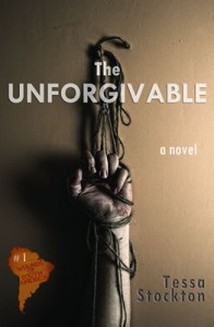
My debut novel, The Unforgivable, which released through Risen Books on April 1, 2011, is a love story entangled in the aftermath of Argentina’s Dirty War. In a nutshell, a Christian woman falls in love with a man who is despised by his nation, accused of war crimes, and who faces trial. There is a necessary chapter in my book entitled, “Private Testimony.” It’s necessary, because it causes the protagonist to shift in how she views this man with whom she has fallen in love. When she hears a survivor’s real life experience in undergoing an interrogation, suddenly a giant hurdle blocks the relationship with her love interest—especially with the claim that he was the one who quite possibly conducted and/or ordered the interrogation.
Details, details, details! They’re often gruesome but manageable. Here’s what I did in an excerpt, spoken from “Rosa,” the survivor:
“Electricity became intimate with me—forced its intimacy through pain I had never known—when it made contact with every part of my body, even my tongue which swelled, and under my nails.
 This man, my interrogator, focused especially on those areas that should have been hidden from him and all men, aside from my husband,” Paloma interpreted. “This man preferred applying shock to those parts the most. I did not recognize my own voice when I screamed. It made me feel like an animal. I defecated on myself. I begged for mercy. I remember thinking: this is what hell is. I had died and gone to hell.
“Soon after—but I really do not know how much time had lapsed—everything blurred and things like time became insignificant. Nothing mattered except for the need to survive.”
So, how much is too much?—because too little often doesn’t deliver the same weight—not if you’re a realist. Well, I’m a romantic realist—but that’s another story! While I like to insert a few “special descriptions” to give a scene that sense of horrible reality, I try not to go overboard. I might write a scene but use milder words when pointing out certain body parts for instance. Torture is by nature horrific but can be filtered for generality—if its inclusion is necessary for plot enhancement.

I can never read too little on the subject. Knowledge is useful. The more I learn the better I can write. Strange but true, fiction serves an array of purposes—even with its use of torture.

***********************************************************************

A former contemporary dancer and missionary, Tessa Stockton, who has also been active in politics and human rights groups, now writes Christian novels. The Unforgivable, now available in Paperback, Kindle & Nook, is her first book in the political intrigue series, Wounds of South America. For more information, visit her at http://www.tessastockton.com/.

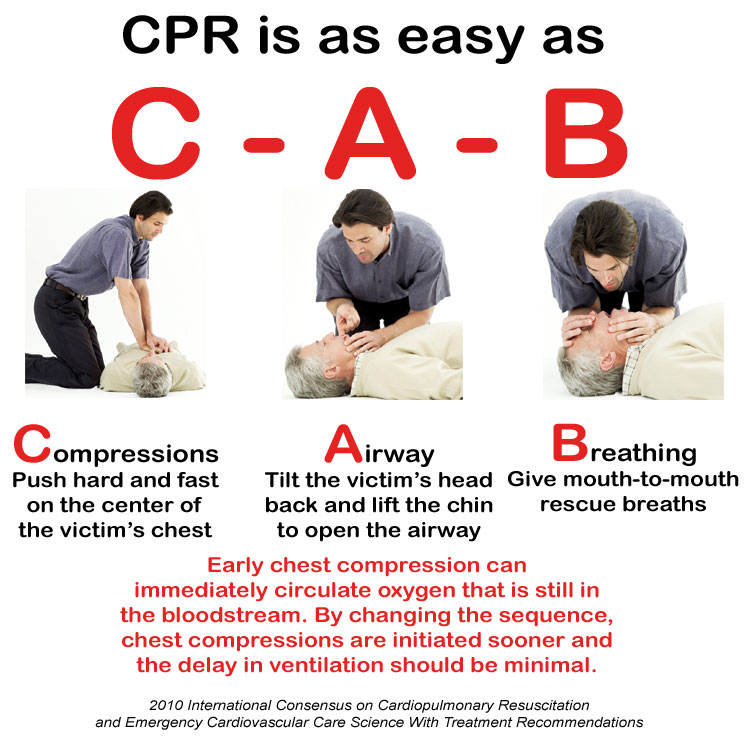
C-A-B: The new CPR guidelines.

At some point in your novel, perhaps you’ll have a character that has a life-threatning event and will require CPR. If so, it’s important to know that there has been a big change in how CPR is delivered to victims from lay people all the way to the healthcare professional.

Why change? Every five years, the American Heart Association (AHA) examines available scientific study to determine if the current guidelines are the best way to resuscitate a patient who is not breathing and does not have a pulse. Over the last ten years, what’s been found, is that compressions are paramount to delivering residual oxygen loaded up on hemoglobin to the cells. The only way to do that is to keep the blood moving.

Another couple of components was the general discomfort among the lay public to initiate CPR, particularly mouth-to-mouth resuscitation. Also, several studies showed that people (including healthcare professionals) were not that great at determining whether or not the patient was breathing and/or had a pulse. Some people mistook agonal respirations (which are gasps of air when a patient is near-death) as breathing and thus would delay support of the patient.

In the new guidelines, there is a quick check for responsiveness. If not responsive and you’re alone, you should get an AED if one is available and call 911. Then return to the patient and attempt resuscitation by starting chest compressions. If you’re with someone then one stays with the patient to perform CPR and the other will get the AED if available and call 911.

The sequence goes as follow:
1. Check the patient for responsiveness and no breathing.
2. Call for help.
3. Check the pulse for no more than 10 seconds.
4. If no pulse, give 30 compressions.
5. Open the airway and give 2 breaths.
5. Resume compressions.

Consider these new AHA guidelines when writing scenes that involve resuscitating a patient. Another thing to keep in mind is that some fire departments are instituting protocols whereby the arriving EMT and/or paramedic will provide 200 compressions before delivering a shock as a way to “prime the pump”. This has been shown to increase the effectiveness of electrical defribillation. If you’re writing a location specific novel, check the local fire department to see what their protocol dictates.